
20 Real Signs of Burnout at Work And How to Reclaim Your Energy
Burnout is a progressive condition that develops over time, often masked by temporary stress or fatigue. Recognizing the signs of burnout at work is essential for timely intervention, as prolonged exposure to these symptoms can lead to severe physical, emotional, and professional consequences. This article examines the signs and symptoms of burnout at work, including early signs of burnout at work, physical signs of burnout at work, and a detailed breakdown of 20 signs of burnout at work. Practical, evidence-based strategies for mitigation are also provided.
What Is Burnout at Work?
Before we dive into the specific symptoms, it is important to clearly define what we are actually talking about. What is burnout at work? It is not a medical condition itself, but rather an “occupational phenomenon,” according to the World Health Organization (WHO).
In simple terms, burnout is a state of emotional, physical, and mental exhaustion caused by excessive and prolonged stress. It occurs when you feel overwhelmed, emotionally drained, and unable to meet constant demands. But it goes deeper than just being “really tired.” It typically involves three specific dimensions:
- Feelings of energy depletion or exhaustion: The tank isn’t just low; it’s empty.
- Increased mental distance from one’s job: This often manifests as negativity or cynicism related to your job. You stop caring about the mission or the people.
- Reduced professional efficacy: You feel like you can’t get anything done, or that what you do achieve doesn’t matter.
Think of it this way: If stress is like drowning in responsibilities, burnout is being all dried up. You aren’t necessarily panicking; you just have nothing left to give. Recognizing this definition is the first step in identifying the signs and symptoms of burnout at work in your own life.
Emotional and Mental Signs of Burnout
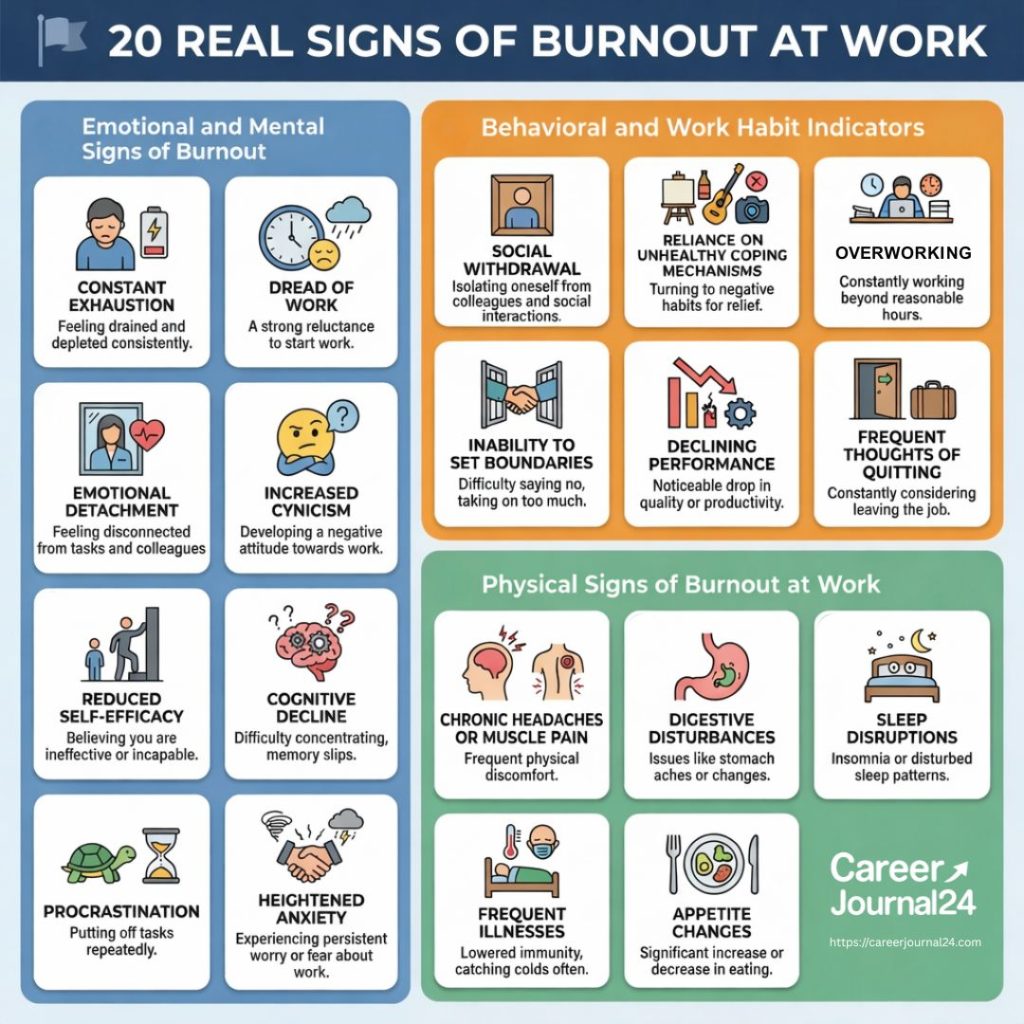
Emotional and cognitive symptoms typically emerge first. These early signs of burnout at work are often misinterpreted as temporary stress, but consistent patterns indicate deeper issues.
1. Constant Exhaustion
This symptom is marked by unrelenting fatigue that persists despite adequate sleep or downtime. Unlike ordinary tiredness, this exhaustion is both mental and physical, leaving individuals unable to engage with tasks that were once manageable. For example, employees may struggle to start their workday, feel mentally drained by mid-morning, or lack the energy to participate in routine conversations. This persistent weariness undermines productivity and reflects the body’s response to chronic stress.
2. Dread of Work
A strong aversion to work-related tasks, even during off-hours, signals burnout. Individuals may experience anxiety about upcoming workdays, avoid checking emails outside office hours, or feel physical discomfort (e.g., nausea) when considering work. This dread often manifests as a reluctance to discuss work topics in personal settings, indicating a shift in how the brain perceives work as a threat rather than a challenge.
3. Emotional Detachment
Employees experiencing burnout often withdraw emotionally from their roles. They may cease to care about project outcomes, show indifference to feedback, or remain disengaged during team discussions. For instance, a previously proactive team member might stop contributing ideas in meetings or fail to acknowledge successful project completions, reflecting a loss of investment in their responsibilities.
4. Increased Cynicism
A noticeable rise in negative attitudes toward work, leadership, or colleagues is a common early indicator. Comments such as “Nothing here ever changes” or “Effort is pointless” become frequent. This cynicism often serves as a defense mechanism to distance oneself from workplace stressors, but it can erode team morale and collaboration.
5. Reduced Self-Efficacy
Burnout diminishes confidence in professional abilities. Individuals may fixate on minor errors, dismiss past achievements, or feel incapable of meeting expectations. For example, an employee with a strong track record might obsess over a single oversight in a report, interpreting it as evidence of incompetence rather than an isolated mistake.
6. Cognitive Decline
Difficulty concentrating, forgetfulness, or frequent mental blocks are hallmark symptoms. Tasks that once required minimal effort, such as drafting emails or prioritizing workloads, become laborious. This “brain fog” stems from prolonged stress overwhelming cognitive resources, leading to slower decision-making and reduced innovation.
7. Procrastination
Delays in completing routine tasks, even with urgent deadlines, indicate burnout. Procrastination here arises from a lack of motivation or fear of failure, not laziness. For instance, an employee might postpone responding to straightforward messages for days, trapped in a cycle of avoidance due to perceived overwhelm.
8. Heightened Anxiety
Work-related anxiety intensifies, manifesting as racing thoughts, excessive worry about performance, or physical tension. Scenarios such as replaying conversations with managers for hours after work illustrate this hypervigilance. Over time, this anxiety can spill into personal life, disrupting sleep and relationships.
Physical Signs of Burnout at Work
Burnout manifests physically, often mimicking symptoms of other health conditions. These physical signs of burnout at work are critical diagnostic clues.
9. Chronic Headaches or Muscle Pain
Persistent tension headaches, neck stiffness, or jaw clenching are common. The body’s sustained “fight or flight” response causes muscle tightness, particularly in the shoulders and upper back. For example, employees may report daily headaches after high-stress meetings or tight deadlines, with symptoms easing only during extended time off.
10. Digestive Disturbances
Stress disrupts gastrointestinal health, leading to nausea, stomachaches, or irritable bowel syndrome (IBS)-like symptoms. These issues often improve during vacations but recur with workload spikes, highlighting their link to workplace stress.
11. Sleep Disruptions
Burnout disrupts sleep in two ways: insomnia due to racing thoughts, or hypersomnia (oversleeping) paired with persistent tiredness. The Mayo Clinic identifies disrupted sleep as a key indicator of workplace burnout (source). For instance, individuals may lie awake for hours analyzing the day’s tasks, only to wake up feeling unrested.
12. Frequent Illnesses
A weakened immune system increases susceptibility to colds, flu, or prolonged recovery. For example, an employee might experience recurring sore throats during high-pressure project phases, with symptoms resolving only when stress levels drop.
13. Appetite Changes
Significant shifts in eating habits, such as skipped meals or stress-induced overeating, are common. Emotional eating in the evening to cope with exhaustion is a frequent behavioral response, often leading to guilt or further fatigue.
Behavioral and Work Habit Indicators
Behavioral changes often provide the clearest evidence of burnout. These signs of burnout at work are observable in daily routines and interactions.
14. Social Withdrawal
Individuals may avoid interactions with colleagues or loved ones. This isolation can manifest as skipping team lunches, ignoring messages, or excusing oneself from social events. Over time, this withdrawal exacerbates feelings of loneliness and stress.
15. Reliance on Unhealthy Coping Mechanisms
Using alcohol, excessive screen time, or junk food to cope with stress signals burnout. For example, an employee might develop a habit of binge-watching shows late into the night to “unwind,” only to feel more fatigued the next day.
16. Loss of Interest in Hobbies
Activities once enjoyed, such as exercise, creative pursuits, or socialising, are neglected. A decline in participation outside work hours reflects the depletion of emotional reserves, leaving little energy for non-work activities.
17. Overworking
Consistently staying late, replying to emails after hours, or taking work home indicates an inability to disconnect. This behavior often stems from guilt or fear of falling behind, perpetuating the burnout cycle by denying the body time to recover.
18. Inability to Set Boundaries
Difficulty saying “no” to additional tasks or unrealistic deadlines is common. Employees may overcommit despite existing workloads, driven by pressure to please others or avoid conflict, leading to unsustainable stress levels.
19. Declining Performance
Increased errors, missed deadlines, or reduced quality of work are red flags. For example, a detail-oriented employee might begin submitting reports with frequent mistakes, reflecting diminished focus and energy.
20. Frequent Thoughts of Quitting
Persistent fantasies about leaving the job or a complete career change reflect deep dissatisfaction. This sentiment often arises alongside feelings of entrapment, where individuals feel too exhausted to search for alternatives but cannot continue in their current role.
Addressing Burnout Through Proactive Strategies
Mitigating burnout requires a multi-faceted approach. Here are evidence-based strategies on how to deal with burnout for both individuals and organizations.
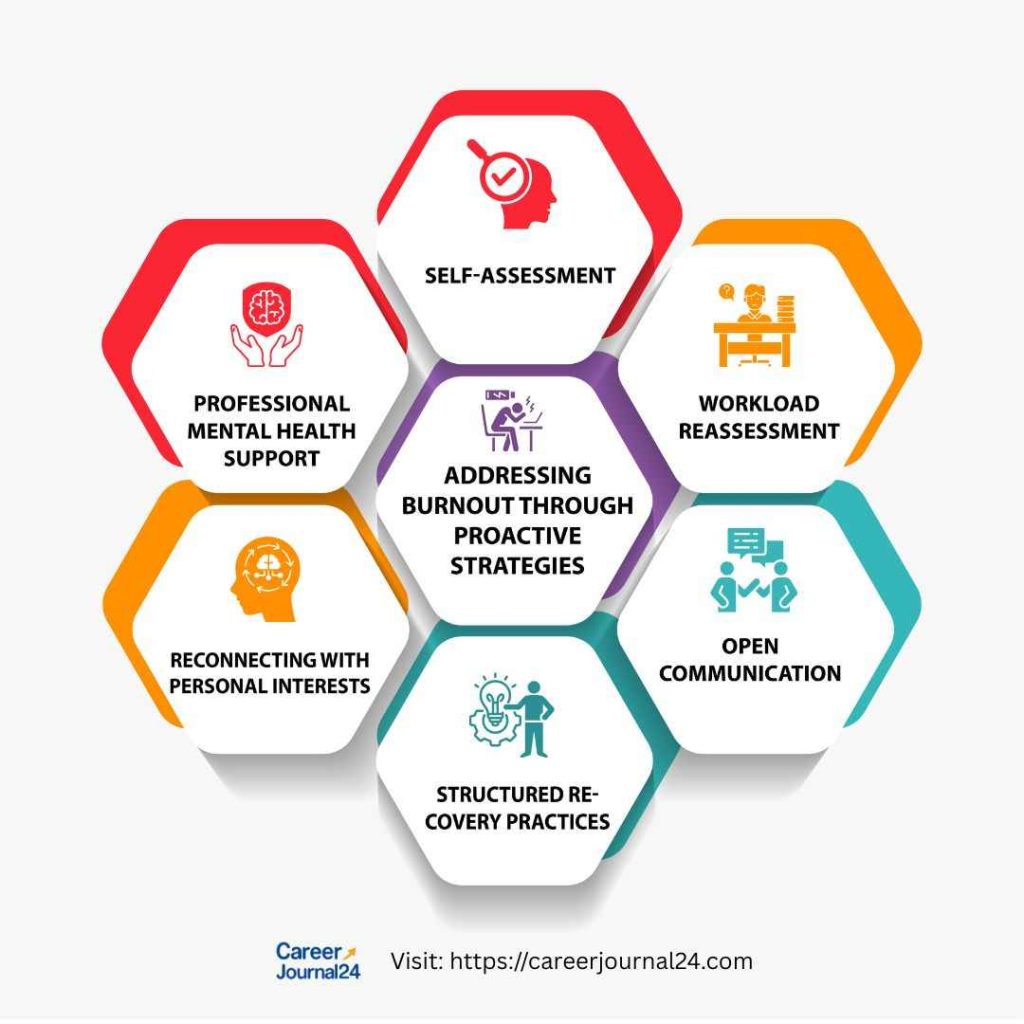
1. Formal Acknowledgment and Self-Assessment
Documenting symptoms over time helps clarify patterns and validate experiences. Tools such as journals or symptom trackers can quantify the severity and frequency of burnout-related issues.
2. Workload Reassessment
Prioritizing tasks by urgency and importance, delegating responsibilities, or renegotiating deadlines with supervisors can reduce pressure. Organizations should implement systems to monitor workload distribution and prevent overload.
3. Open Communication
Employees should voice concerns to trusted colleagues, managers, or human resources departments. Organizations must foster cultures where such discussions are encouraged without fear of reprisal. Resources from Mind, a mental health charity, provide guidance on navigating these conversations (source).
4. Structured Recovery Practices
Incorporating brief rest periods, such as three-minute breathing exercises or short walks, can restore mental clarity. Designated “no-work” times, including lunch breaks away from screens, are essential for sustainable productivity.
5. Reconnecting with Personal Interests
Scheduling time for hobbies, exercise, or social activities, even in small increments, helps rebuild a sense of identity beyond work. For example, a 10-minute walk or a weekly phone call with a friend can counter feelings of isolation.
When Professional Support Is Essential
Severe burnout symptoms, such as persistent hopelessness, panic attacks, or suicidal ideation, necessitate immediate professional care. Employee Assistance Programs (EAPs) or licensed therapists can provide confidential counseling. The American Psychological Association offers directories to locate qualified providers (source).
Conclusion
The signs and symptoms of burnout at work, from early signs of burnout at work like emotional exhaustion to physical signs of burnout at work such as chronic pain, require timely recognition and intervention. By implementing strategies such as workload adjustments, boundary-setting, and self-care, individuals can mitigate burnout’s effects and restore well-being. Organizations play a critical role by promoting supportive environments that prioritize mental health. Acknowledging and addressing these 20 signs of burnout at work is not merely beneficial; it is essential for sustaining healthy, productive workplaces.



One Comment