
How to Deal with Rude Coworkers at the Workplace
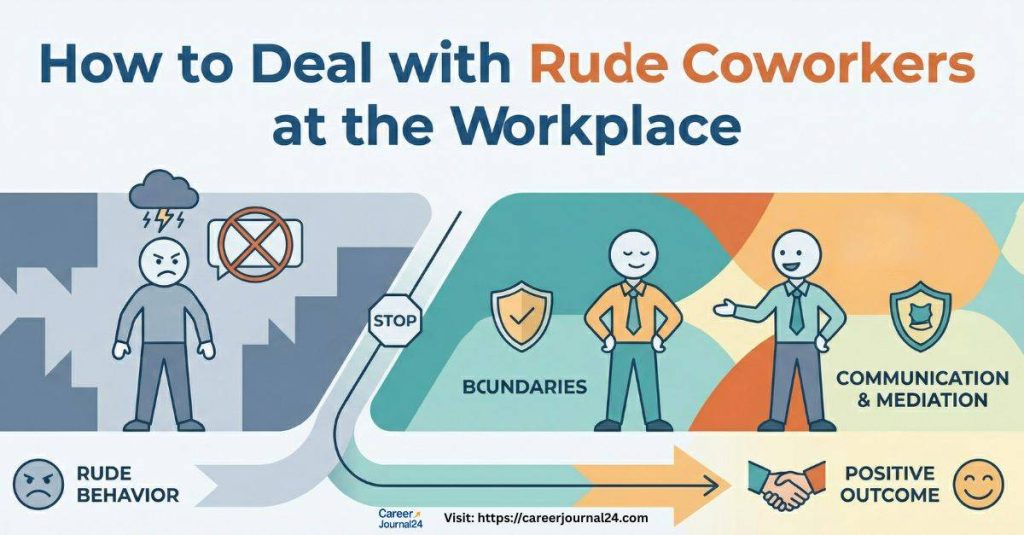
Rude behavior at work can quickly erode motivation, confidence and job satisfaction. When you are trying to figure out how to deal with rude coworkers at the workplace, you may be coping with eye rolls in meetings, curt emails, interruptions, gossip or comments that feel personal. These behaviors can seem small in the moment, yet add up to a stressful environment that makes it harder to focus and perform.
You cannot fully control how colleagues behave. However, you can control your own responses. You are also in charge of the boundaries you set and the support you seek. Learning how to handle rude coworkers in the workplace is an essential skill for any professional. You must also understand how to deal with difficult co-workers to maintain your focus.
This piece of writing explains why coworkers can be rude, offers practical strategies for managing difficult interactions, and outlines when behavior may cross the line into bullying or harassment. The goal is to give you realistic steps you can use in everyday situations, in a professional and respectful way.
Why coworkers can be rude
Rude or disrespectful behavior rarely appears out of nowhere. While it is never your responsibility to excuse it, understanding possible reasons can help you respond in a more strategic way rather than taking every action as a personal attack.
Stress and workload pressures
Many employees operate under tight deadlines, high targets and constant change. When pressure is intense, some people become short-tempered, impatient or less considerate in how they communicate. A colleague who snaps in a meeting or sends a one-line message that sounds harsh may be reacting to stress more than to you personally. This does not make the behavior acceptable, but it can help you separate their pressure from your self-worth.
Limited communication skills
Not everyone has been trained to give feedback, disagree or raise concerns constructively. A coworker might speak bluntly, interrupt often or criticize ideas without suggesting alternatives because they do not know another way to express themselves. In multicultural workplaces, differences in directness across cultures and languages can also be misread as rudeness.
Personality and work style differences
Some people are naturally more direct or task focused. Others prioritize relationships and tone. If you are sensitive to tone and work with someone who is extremely direct, their style can feel dismissive or rude, even when they believe they are just being efficient. Differences in introversion and extroversion may also play a role. For instance, an extroverted colleague who thinks out loud might interrupt more than they realize.
Competition and insecurity
In environments where performance is closely compared, some individuals feel threatened by others’ success. Mean coworkers may respond through subtle put downs, taking credit for others’ work or constantly highlighting colleagues’ mistakes. Rudeness can be a defensive strategy to protect status, mask insecurity or gain favor with managers.
Organizational culture and norms
If leaders tolerate sarcasm, public criticism or gossip, those behaviors can quickly become part of the culture. New employees adapt to what they see around them. In this kind of environment, even people who are not naturally rude may adopt sharp humor or dismissive habits simply to fit in. Research on workplace incivility, including findings shared by the Society for Human Resource Management, shows that disrespect can become normalized over time. When this happens, it spreads across teams and reduces both employee engagement and performance.
How to Deal with Rude Coworkers
Knowing how to deal with rude coworkers is about combining self-management with clear, professional boundaries. The following ten approaches focus on actions you can control.
1. Observe and describe the behavior clearly
The first step is to distinguish between a one-time issue and an ongoing pattern. Instead of relying only on memory, make a brief private record of incidents that concern you. Note what was said or done, where it happened, who was present and how it affected your work. For example, you might note that a colleague interrupted you three times during a client meeting and dismissed your idea as unrealistic. Later, they sent a follow-up email that excluded you from a key decision.
This kind of factual description helps in three ways. It reduces self-doubt because you can see concrete examples. At the same time, it prepares you for any future conversation with the coworker, your manager or HR. Also, it keeps the focus on specific conduct rather than labels like rude or toxic, which can feel subjective.
2. Manage your immediate reaction
Rude behavior often triggers a strong emotional response. You might feel angry, embarrassed or tempted to respond sharply. Before you react, give yourself a brief pause. A slow breath, a short silence or even a neutral phrase like let me think about that for a moment can give you time to regain control of your tone.
By responding calmly, you protect your professional reputation and keep the focus on the original behavior rather than on any emotional outburst. This is essential when you are learning how to handle rude coworkers in the workplace. It shows colleagues and leaders that you can remain composed under pressure, even when others are not. If you find this difficult, techniques such as reframing the situation or practicing responses in advance with a trusted friend can help.
3. Use assertive, respectful language
Assertive communication allows you to stand up for yourself without attacking the other person. When a coworker is rude, focus on stating what you observed, how it impacted your work and what you need going forward. For instance, you might say in a calm tone that receiving feedback in front of the whole team makes it harder for you to process it. You could then explain that you would prefer to discuss detailed concerns one to one.
This style is especially useful when thinking about how to deal with difficult co-workers who may not realize the effect of their words. Short, clear statements reduce confusion. They also demonstrate maturity and professionalism, which can positively influence how managers view your handling of the situation.
4. Set and maintain clear boundaries
Boundaries define what behavior you will and will not accept. When mean colleagues make personal comments, push work onto you or raise their voice, it is appropriate to state a limit. You might explain that you are comfortable discussing work tasks but not personal topics such as your appearance, family life or beliefs.
Setting personal boundaries often involves repetition. If a coworker continues to behave in the same way, you calmly remind them of your limit and redirect the conversation. Over time, consistent boundaries teach others how to interact with you. They are especially valuable when working out how to deal with mean colleagues who may test your reactions. Boundaries are not confrontational, they are a form of self-respect and help create a more predictable working relationship.
5. Address issues in a private conversation
Whenever possible, sensitive issues are best discussed in private, not in front of a team. Invite your coworker to a short meeting in a neutral space. Begin by stating your intention, for example that you want to improve how you work together. Then describe a specific situation, the impact on your work and what you would like to happen differently.
For instance, you could say that during the last team meeting, when your suggestion was called unrealistic in a sharp tone, you felt discouraged from contributing further. You might add that you value constructive feedback and ask that in future concerns be expressed with more detail so you can address them. Many people respond better in this type of one to one setting because they are less defensive than in a public discussion. If you need ideas for phrasing difficult conversations, resources such as Harvard Business Review’s guidance on difficult workplace talks can be useful.
6. Adapt how you work together
If a coworker’s style is consistently difficult, you may not be able to change their personality, but you can adjust how you collaborate. For someone whose emails seem abrupt, you might suggest a short regular check-in, which can make tone easier to read. For a colleague who becomes defensive in verbal discussions, you could summarise agreements in writing after meetings to reduce misunderstandings.
Sometimes, structuring work differently reduces friction. Agreeing in advance on deadlines, responsibilities and decision-making authority can limit last-minute pressure or confusion that often leads to rude exchanges. These adjustments are especially helpful when considering how to deal with difficult co-workers whose behavior is disruptive but may not be personally targeted.
7. Limit unnecessary exposure while staying professional
You are not required to spend more time than necessary with mean coworkers. It is acceptable to keep interactions focused on tasks and to decline optional social activities with individuals whose behavior drains you. For instance, you might choose to have lunch with other colleagues or use breaks for a brief walk instead of joining conversations that tend to turn negative.
At the same time, remain courteous in required interactions. Greet them, respond to work-related messages in a timely way and contribute in meetings. This balance helps you maintain professionalism while protecting your energy. Over time, reducing informal contact with mean colleagues can lessen the emotional impact of their behavior.
8. Build allies and a support system
Working with rude or mean coworkers is easier when you have positive professional relationships elsewhere. Invest time in building rapport with colleagues who are respectful, collaborative and reliable. Offer help when you can, share credit generously and acknowledge others’ contributions. This creates a network of people who are more likely to support you if conflicts arise.
Allies can also provide perspective. If you are unsure whether behavior is truly inappropriate, a trusted coworker can share what they have observed. They may also back you up in meetings, for example by returning the floor to you if you were interrupted. A strong network reduces isolation and reminds you that one person’s rude behavior does not define the entire workplace.
9. Involve your manager constructively
If you have addressed issues directly and the rude behavior continues, involving your manager is often the next appropriate step. Schedule time to speak privately and present your concerns factually. Share specific examples, describe how they impact your ability to do your job and explain what you have already tried to resolve the situation.
Instead of asking your manager to simply fix the person, frame the conversation around solutions. You might ask whether responsibilities can be clarified, whether they can facilitate a mediated discussion or whether expectations about team communication can be reinforced. This approach aligns with your manager’s responsibility to ensure effective collaboration and a safe environment, while showing that you are proactive and reasonable in managing conflict.
10. Use HR and formal channels when necessary
When rude or aggressive behavior becomes frequent, targeted or severe, or when it does not improve after raising it with your manager, consider contacting HR or your People team. Human resources professionals are trained to handle issues such as ongoing incivility, bullying and harassment. Bring your documentation and focus on clear descriptions of what has occurred, including dates, locations, witnesses and consequences for your work.
HR may investigate, coach the individuals involved, adjust reporting lines or update policies and training. They can also advise you on your rights and options, especially if you suspect that behavior may relate to protected characteristics such as gender, race or religion. Reputable organizations, including the American Psychological Association, emphasize that persistent disrespect and hostility at work can seriously affect mental and physical health, so using formal support is a responsible step, not an overreaction.
When rudeness becomes bullying or harassment
Not all rude behavior is bullying, and not all conflict is harassment. However, patterns of behavior can cross important lines. Recognizing these distinctions helps you decide when stronger action is needed.
Repeated patterns and power imbalance
Bullying usually involves a repeated pattern of negative behavior directed at the same person, especially where there is a power difference, such as a manager to an employee or an influential peer to a colleague. This can look like regular public put downs, constant criticism with no constructive guidance, deliberate exclusion from information or opportunities, or setting someone up to fail. A single sharp comment is unpleasant, but persistent targeting over time may indicate bullying. Keeping a factual record of dates, situations and witnesses can help you and your organization see that the behavior is not isolated.
Harassment and protected characteristics
Harassment occurs when unwelcome behavior is based on protected characteristics such as race, gender, religion, disability, age or similar traits defined by law in your region. It may include offensive jokes, slurs, repeated comments about someone’s appearance or beliefs, or any conduct that creates a hostile or intimidating environment for a person because of who they are. Even if framed as humor, such behavior can still count as harassment. If you experience or witness this, review your organization’s policies and consider reporting it through the formal channels provided, such as HR or an ethics hotline.
Impact on health and performance
Persistent rudeness, bullying or harassment can significantly affect your mental and physical health, leading to stress, anxiety, sleep problems and difficulty concentrating, which in turn can impair your performance and career growth. Research highlighted by organizations like the American Psychological Association shows that ongoing exposure to hostile work environments increases the risk of burnout and other health issues. If you notice these signs in yourself, it may be helpful to speak with a healthcare professional or counselor and to explore support options such as an employee assistance program. Addressing the impact early can make it easier to recover and make informed decisions about your next steps.
Conclusion
Learning how to deal with rude coworkers at the workplace involves more than one conversation or technique. It is a combination of observing behavior clearly, managing your reactions, communicating assertively, setting boundaries and using the support systems available to you. While you cannot control how every colleague behaves, you can decide how you respond and when to seek help.
Over time, these strategies not only protect you from the impact of mean coworkers and difficult co-workers, they also demonstrate professionalism and resilience that benefit your long-term career, whether you stay where you are or eventually move to a workplace that better reflects your values.