
Quiet Leadership: A Complete Guide to Leading Without the Noise
The modern corporate ecosystem is undergoing a significant transformation regarding how we define authority and influence. For a long time, the dominant image of a manager was someone who filled every room with their voice and directed every action with high energy. However, the rise of quiet leadership has introduced a more effective and sustainable way to guide teams. This approach prioritizes thoughtful reflection over instant reactions and emphasizes the success of the collective over the ego of the individual. In an era where workplace burnout is at an all-time high, the ability to lead with a calm and steady hand is no longer just an alternative style but a necessary evolution for modern organizations.
What Is Quiet Leadership
If you find yourself asking what quiet leadership is in the context of a busy office, it is helpful to think of it as a focus on results through subtle influence. This philosophy suggests that the most impactful leaders are those who direct their energy toward understanding problems deeply before suggesting solutions. It is a departure from the heroic leadership model where one person is expected to have all the answers. Instead, this style relies on creating an environment where every team member feels empowered to contribute. It is about being a catalyst for others rather than the sole driver of progress, ensuring that the organization moves forward with purpose and stability.
Traits of Quiet Leadership
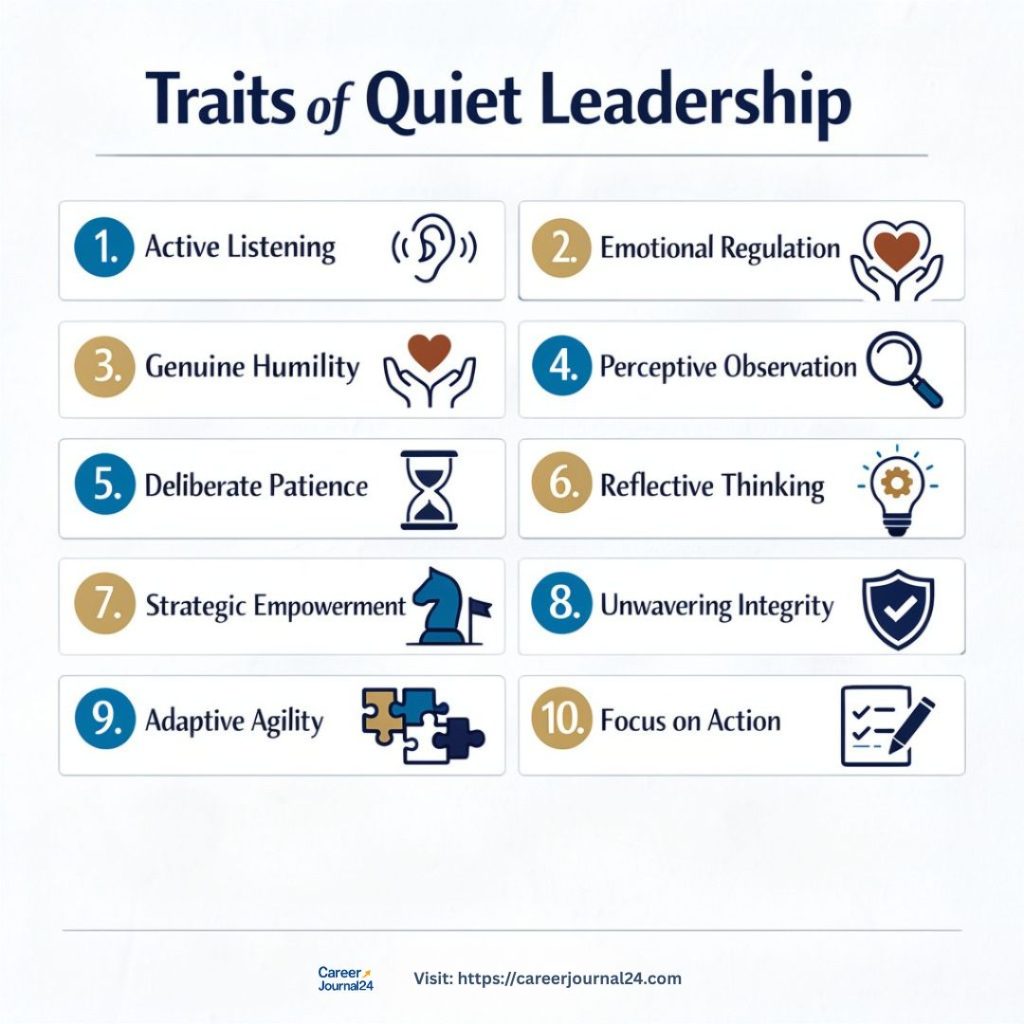
Understanding the specific characteristics of quiet leaders helps us see why they are so effective in modern organizations. These traits are often internal and psychological, providing a foundation for long-term success.
1. Active Listening
A primary trait of this leadership style is the ability to listen with full intention. These individuals do not just hear words but they process the underlying emotions and concerns of their team. By giving others the space to speak without interruption, they gather more accurate information than those who are quick to interject. This creates a culture where employees feel valued and understood. You can learn more about these communication nuances at Psychology Today to see how deep listening improves professional bonds. It allows the leader to identify the root causes of problems before they escalate into major departmental crises.
2. Emotional Regulation
The ability to remain calm under pressure is a hallmark of the quiet leadership style. When a crisis hits, these individuals do not react with panic or anger. They process their emotions internally and project a sense of stability that reassures the entire team. This emotional steadiness prevents the “contagion” of stress from spreading through the office. By managing their own reactions, they create a safe environment where others can focus on solving the problem at hand. This trait builds immense trust, as employees know their leader will remain objective and composed regardless of the circumstances.
3. Genuine Humility
A quiet leader does not feel the need to be the center of attention or to take credit for every win. They recognize that their primary role is to facilitate the success of their team. This humility is not about a lack of confidence but rather a secure sense of self that does not require constant external validation. By deflecting praise toward their colleagues, they boost morale and encourage a sense of shared ownership. This approach eliminates the internal competition for the leader’s favor and focuses everyone on the actual goals of the organization.
4. Perceptive Observation
While others are busy presenting themselves, quiet leaders are often observing the dynamics of the room. They notice who is hesitant to speak and who might be struggling with a particular task without saying so. This high level of situational awareness allows them to intervene in subtle ways that prevent larger conflicts. They can spot trends and patterns in behavior that others might overlook due to their own desire to be heard. This trait makes them excellent at talent management, as they truly understand the strengths and weaknesses of each individual on their team.
5. Deliberate Patience
In a world that demands instant answers, the quiet leader values the importance of time. They are willing to sit with a problem and wait for all the necessary data to emerge before making a call. This patience prevents the team from heading down the wrong path due to a rushed or impulsive decision. While this may look like indecision to some, it is actually a strategic move to ensure long-term success. Their ability to wait for the right moment to act ensures that when they do move, they do so with maximum impact and minimal wasted effort.
6. Reflective Thinking
Every action taken by a quiet leader is usually preceded by a period of deep reflection. They consider the long-term consequences of their choices and how those choices align with the overall mission of the company. This reflective nature allows them to provide more meaningful guidance to their team. Instead of offering generic advice, they provide specific and thoughtful insights that help their employees grow. This trait ensures that the team is not just busy but is actually moving in a direction that is strategically sound and sustainable for the future.
7. Strategic Empowerment
Empowerment is not just a buzzword for these leaders; it is a core operational strategy. They provide their team members with the resources and the autonomy they need to succeed and then they step back. They do not micromanage because they trust their recruitment and training processes. This trait allows employees to take risks and learn from their own experiences, which is vital for professional development. By stepping out of the way, the quiet leader allows the natural talents of the team to shine, resulting in higher quality work and a more engaged workforce.
8. Unwavering Integrity
Because they do not rely on charisma or flashy persuasion, quiet leaders depend heavily on their personal integrity. Their actions must align perfectly with their words for them to maintain influence over the long term. Many organizational experts agree that this type of moral consistency is among the foundational traits of a good leader, as it creates a predictable and secure environment for the team. This reliability reduces office anxiety and increases productivity across the board. When employees see their leader behaving with honor and fairness even in difficult times, they are much more likely to mirror those behaviors, creating a positive and ethical culture within the workplace.
9. Adaptive Agility
Quiet leadership does not mean being rigid or slow to change. In fact, these leaders are often more agile because they are not emotionally tied to a public stance they have taken. They are willing to change their minds when presented with better evidence. This adaptability is crucial in today’s fast-paced market where new technologies and shifts can occur overnight. By remaining flexible and open to new ideas, they ensure that their team stays relevant. Their quiet nature allows them to pivot strategies without the drama or ego-bruising that often accompanies a shift in direction.
10. Focus on Action
Ultimately, the quiet leader is measured by their output rather than their speeches. They believe that their results should speak for them. This focus on tangible outcomes keeps the team grounded in reality. They prioritize work that moves the needle rather than performative tasks that only look good on paper. This trait creates a high-performance culture where results are the primary metric of success. Employees appreciate this clarity because they know exactly what is expected of them and they see their leader working just as hard behind the scenes to help them achieve it.
How to Practice Quiet Leadership at Work
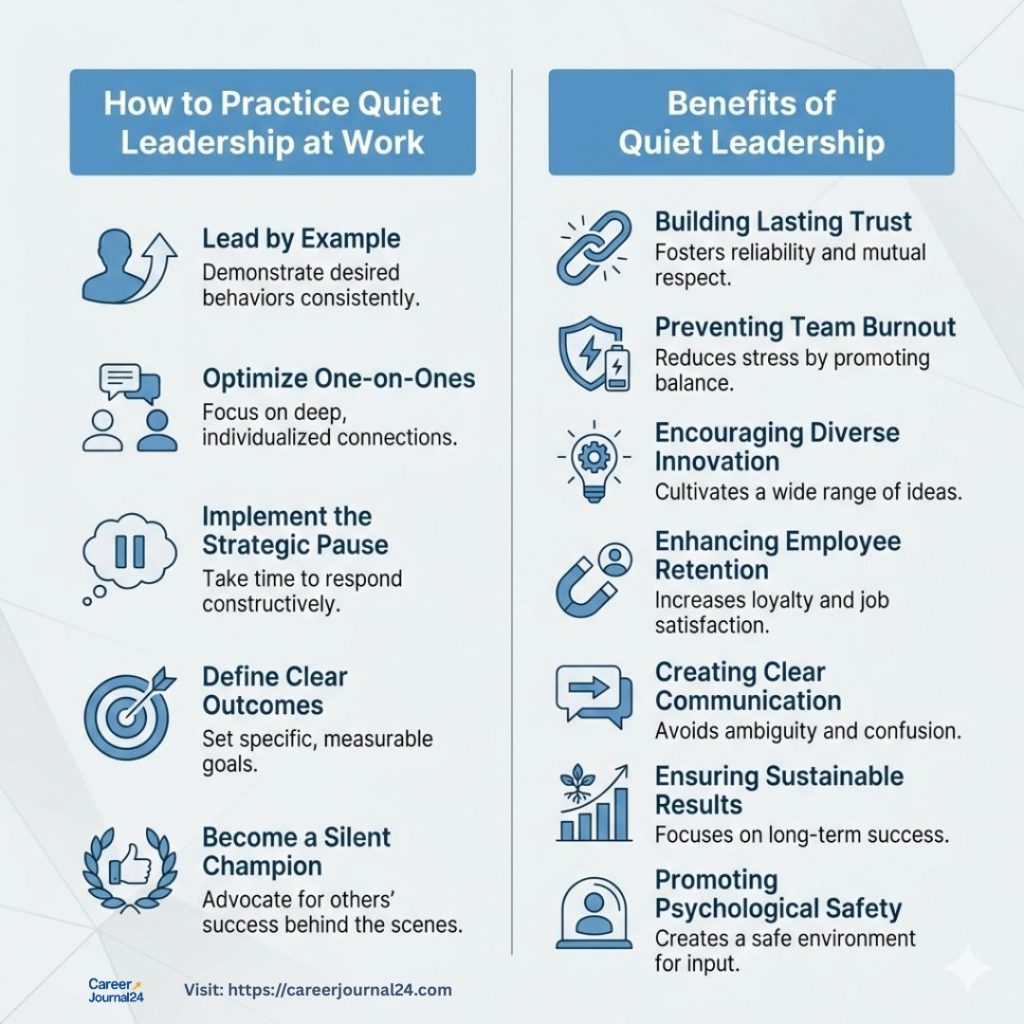
Adopting a quiet leadership style is a deliberate choice that involves changing daily habits. These practices focus on building influence through subtle and consistent interactions.
1. Lead by Example
The most effective way to influence a team is to demonstrate the behaviors you want to see. If you want a culture of punctuality and focus, you must be the most punctual and focused person in the building. You do not need to announce your arrival or your dedication. People naturally observe and mimic the habits of those in charge. By consistently producing high-quality work and maintaining a professional demeanor, you set a standard that requires no verbal enforcement. This silent form of guidance is often more powerful than any motivational speech.
2. Optimize One-on-Ones
Instead of relying on large group meetings to get your point across, focus your energy on individual interactions. These private conversations allow for a deeper level of connection and a more honest exchange of ideas. You can tailor your coaching to the specific needs of each person, which shows that you value them as an individual. These meetings are the perfect time to practice your listening skills and to provide quiet encouragement. Over time, these individual threads of trust weave together to create a very strong and resilient team bond.
3. Implement the Strategic Pause
Before responding to a difficult email or a challenging question, take a deliberate five-second pause. This small gap allows you to move past your initial emotional reaction and choose a response that is helpful and constructive. It also signals to others that you are giving their input serious thought. This practice helps to de-escalate tension and prevents you from saying something you might later regret. You can find more about the benefits of a reflective mindset at Mindful. In a fast-moving office, the person who takes the time to think is often highly respected.
4. Define Clear Outcomes
Quiet leadership thrives when everyone knows the goal. Instead of constantly checking in on the process, spend your time clearly defining what success looks like. Use written documents or brief, clear instructions to outline the expectations. Once the team understands the “what” and the “why,” you can give them the space to figure out the “how.” This clarity reduces the need for constant verbal redirection and allows you to lead from the background while the team takes center stage to execute the vision effectively.
5. Become a Silent Champion
Look for opportunities to highlight the work of others without drawing attention to yourself. This could mean mentioning a colleague’s success to a senior executive in passing or writing a short note of appreciation for a job well done. By acting as a silent advocate for your team, you build a reputation as a leader who truly cares about the career growth of others. This creates immense loyalty. People are far more willing to go the extra mile for a leader who they know has their back in the rooms where they are not present.
Benefits of Quiet Leadership
The positive impact of the quiet leadership style can be seen in both the productivity of the team and the overall health of the organizational culture.
1. Building Lasting Trust
Trust is the currency of any successful team and it is earned through consistency rather than grand gestures. Quiet leaders build trust by being reliable and predictable over long periods. Because they do not seek the spotlight, their motives are rarely questioned by their subordinates. Employees feel secure knowing that their leader is focused on the health of the project rather than personal glory. This deep sense of trust allows for more open communication and a willingness to collaborate, as no one feels they are in competition with their manager.
2. Preventing Team Burnout
Loud and high-energy leadership styles can often be exhausting for a team to maintain over the long term. Constant excitement or pressure can lead to high levels of stress. In contrast, the quiet approach provides a sense of calm that allows people to focus on their work without unnecessary emotional interference. By keeping the office environment stable and predictable, these leaders help their employees preserve their energy for the tasks that actually matter. This leads to higher job satisfaction and significantly lower rates of burnout and turnover within the organization.
3. Encouraging Diverse Innovation
When a leader is the loudest person in the room, others often stay silent to avoid conflict or because they feel their ideas will be overshadowed. A quiet leader creates the space for everyone to speak, especially the introverts who might have the most profound insights. By listening more than they talk, they ensure that a wider range of ideas is considered. This diversity of thought is the primary driver of innovation. Teams led by quiet individuals often come up with more creative solutions because they are not just following the leader’s initial suggestion. You can read more about the research on diverse team performance at Harvard Business Review. Teams led by quiet individuals often come up with more creative solutions.
4. Enhancing Employee Retention
People do not quit jobs; they quit bosses. The quiet style of leadership is inherently respectful of the individual, which makes employees feel valued and seen. When a manager provides support and autonomy without the need for constant control, top talent is much more likely to stay. They appreciate the lack of office drama and the focus on professional growth. By creating a culture of quiet excellence, you attract high performers who want to do great work in a professional and calm environment, leading to a more stable and experienced team.
5. Creating Clear Communication
It might seem counterintuitive, but quiet leadership often leads to clearer communication. Because these leaders speak less often, they tend to be much more precise when they do. They avoid jargon and fluff, focusing instead on the essential information that the team needs to move forward. This reduces the confusion that often comes from over-communicating or changing directions frequently. When the boss speaks, everyone listens because they know the message will be relevant and well-considered. This efficiency saves time and reduces the mental load on everyone involved.
6. Ensuring Sustainable Results
Heroic leadership can sometimes produce quick, flashy wins that are not sustainable in the long run. The quiet approach is focused on building systems and cultures that can function even when the leader is not present. By empowering others and focusing on the “invisible” work of organizational health, these leaders ensure that the team’s success is not dependent on a single personality. This creates a legacy of performance that continues to pay dividends long after the project or the leader has moved on to something else.
7. Promoting Psychological Safety
Psychological safety is the belief that one can speak up or make a mistake without being punished or humiliated. Quiet leaders are the best at creating this safety because their reactions are tempered and objective. When a team member fails, a quiet leader focuses on the lesson rather than the blame. This allows for a culture of experimentation and continuous improvement. When people aren’t afraid of a loud reprimand, they are much more likely to be honest about problems early on, which allows for faster and more effective interventions.
Quiet Leadership vs Traditional Leadership
The main difference between these two styles lies in where their influence comes from and how they engage with people around them. Here are some key differences between quiet leadership and traditional leadership.
The Power Source: Traditional leadership relies on extrinsic power, using formal titles and hierarchy to drive results. In contrast, the quiet leadership style is built on intrinsic power. This influence is earned through technical expertise, emotional intelligence, and consistent character. While one demands respect, the other attracts it by being a reliable and knowledgeable resource.
Communication Flow: Conventional managers often dominate conversations to ensure their vision is primary. Quiet leadership prioritizes a balanced flow of information through active listening and observation. These leaders speak less but with greater impact, ensuring their contributions are well-considered. This shift from monologue to dialogue encourages team members to share insights and take ownership.
Problem Solving: Traditional leadership is often heroic, focusing on rapid, high-visibility solutions to immediate crises. Quiet leadership favors a more deliberate, reflective process that considers long-term implications. These leaders prefer to troubleshoot problems collaboratively rather than unilaterally. This patient approach ensures that solutions are sustainable and address root causes rather than just symptoms.
Team Development: In traditional setups, the leader is the central protagonist while the team focuses on execution. Quiet leaders act as coaches from the background, prioritizing the professional growth of their staff. They provide the autonomy necessary for individual success and step out of the spotlight. This builds a resilient workforce that does not depend on a single personality.
Organizational Impact: The legacy of a traditional leader is often tied to personal charisma and “loud” wins. Quiet leadership focuses on building a culture of stability and psychological safety. These leaders create systems that thrive long after they have moved on. Their impact is measured by the strength of the team and the sustainability of results rather than individual presence.
Challenges Quiet Leaders Face
Despite its many benefits, leading quietly comes with a unique set of obstacles that require careful management to ensure career success.
1. The Perception of Weakness
In some traditional business environments, silence is still mistaken for a lack of confidence or a lack of ideas. People who do not speak up immediately may be viewed as passive or uninterested. Overcoming this bias requires the leader to be very intentional about their “presence.” You must ensure that while you are quiet, you are still seen as a decisive and competent force. This challenge often requires a quiet leader to occasionally step out of their comfort zone to assert their authority in a way that is clear and undeniable.
2. Being Overlooked for Growth
Because they do not self-promote, quiet individuals are sometimes passed over for promotions in favor of their more vocal peers. Decision-makers often notice the person who is always talking in meetings rather than the person who is actually doing the most work. To combat this, quiet leaders need to find subtle ways to make their results known. This might involve regular status reports that highlight team successes or building strong relationships with mentors who can advocate for them. It is a balancing act between staying humble and ensuring your career does not stall.
3. Slower Initial Decision-making
The desire to be thorough and reflective can sometimes lead to a slower pace of decision-making. In high-velocity industries, this can be seen as a liability. There are times when a “good” decision made quickly is better than a “perfect” decision made too late. Quiet leaders must learn to recognize when they have enough information to act and when they need to push themselves to move faster. Developing a mental framework for rapid decision-making can help balance their natural tendency toward deep reflection with the practical needs of the business.
4. Misinterpreted Silence
Silence can be a blank canvas onto which others project their own fears and insecurities. If a leader is quiet during a time of change, employees might assume the worst. They might think the leader is hiding bad news or that they don’t have a plan. To prevent this, a quiet leader must supplement their silence with clear and frequent communication about the state of affairs. You don’t have to be loud, but you do have to be transparent. Providing regular updates helps to fill the information vacuum that silence can sometimes create.
5. Networking and Social Hurdles
A large part of leadership involves building relationships outside of your immediate team. For those who prefer quiet work, the performative aspects of networking can be draining. Attending conferences, social mixers, or high-pressure sales meetings can feel like a chore. However, these connections are vital for the health of the organization. The challenge is to find a way to network that feels authentic. This usually involves focusing on deep, one-on-one connections rather than trying to work the entire room, which plays to the strengths of the quiet personality.
6. Communication Gaps
Sometimes, a quiet leader can be so far ahead in their own thinking that they forget to bring the team along with them. Because they process things internally, they might assume that everyone else has reached the same conclusions they have. This can lead to a gap in understanding that creates friction within the team. It is important to make the internal external. Briefly explaining the logic behind a decision helps the team follow your lead. Sharing your thought process prevents people from feeling left in the dark and ensures everyone is aligned.
Signs You Might Already Be a Quiet Leader
Many people practice this style of leadership without even realizing it. Recognizing these signs can help you lean into your strengths and lead more effectively.
1. You Prefer Listening
If you find that you are more interested in what others have to say than in hearing your own voice, you are already practicing one of the core tenets of this style. You likely find that you learn more from a ten-minute conversation where you say very little than from a thirty-minute presentation where you do all the talking. This preference for information gathering over information broadcasting is a clear sign of a quiet mindset. It allows you to build a more accurate map of reality, which is the foundation of good leadership.
2. You Avoid Personal Credit
When a project succeeds, your first instinct is to point toward the contributions of your team members. You feel a sense of pride in their accomplishments rather than a need to be the hero of the story. This lack of ego-driven ambition is rare and highly valued. If you find yourself more satisfied by the growth of your employees than by your own awards or recognition, you are operating as a quiet leader. You understand that your success is a direct reflection of the success of the people you manage.
3. People Seek Your Advice
Do colleagues often come to you in private to ask for your perspective on a problem? This is a sign that they value your judgment and trust your discretion. People seek out quiet leaders because they know they will get a thoughtful and objective response rather than a snap judgment. If you have become the “de facto” advisor for your peers, it means you have already built the intrinsic power that is central to this leadership style. Your influence is based on the quality of your insights rather than your title.
4. You Stay Calm in Chaos
While others are reacting with high emotion to a missed deadline or a lost client, you find yourself focusing on the next practical step. You may feel the stress, but you don’t let it dictate your actions. This ability to maintain a level head is a natural trait of the quiet leader. If you are often the person who calms the room or brings the conversation back to the facts, you are providing the stability that every high-performing team needs to survive the ups and downs of the business cycle.
5. You Value Consensus
You don’t feel the need to “win” every meeting. Instead, you are more interested in finding the solution that the whole team can get behind. You look for common ground and try to synthesize different viewpoints into a coherent plan. This collaborative approach is a hallmark of the quiet style. If you find that you are naturally inclined to ask, “What does everyone think about this?” before making a final call, you are building a culture of inclusion and shared responsibility that is very hard to break.
6. You Lead Through Action
You are likely the person who stays late to help a teammate finish a report or who quietly fixes a bug in the code without mentioning it. In your approach, doing is more important than describing. This bias toward action over rhetoric is a powerful way to lead. If your team knows that you are in the trenches with them and that you wouldn’t ask them to do anything you aren’t willing to do yourself, you have earned their respect through your behavior rather than your words.
7. You Observe Patterns
You often notice subtle shifts in the market or in team morale before they become obvious to everyone else. This predictive ability comes from your habit of quiet observation. You aren’t distracted by the noise, so you can see the signal. If you find yourself saying, “I had a feeling this was going to happen,” more often than not, it is because you have been paying attention to the small details. This foresight is a massive advantage in strategic planning and helps you guide your team around obstacles before they hit.
Final Thoughts
As we move toward a future that values empathy and collaboration over dominance, the importance of quiet leadership will only continue to grow. There are many quiet leadership quotes that remind us of the power of restraint, such as the idea that “still waters run deep.” By embracing this style, you are not just becoming a better boss; you are helping to create a more human and effective workspace. Whether you are leading a small startup or a large department, remember that your silence can be just as influential as your speech. Focus on the success of those around you, and your own success will naturally follow as a result of the strong, resilient culture you have built.