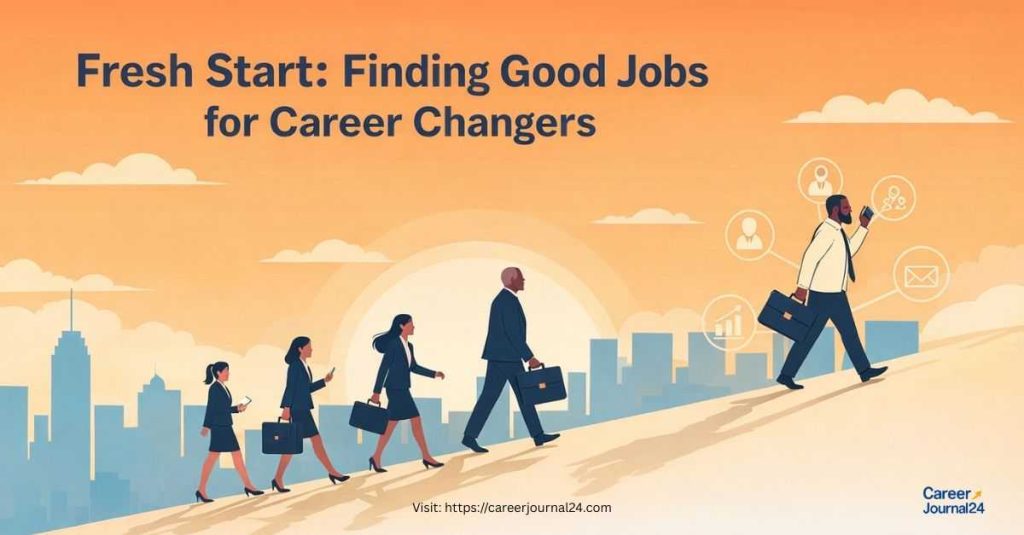
Fresh Start: Finding Good Jobs for Career Changers
The thought of changing careers can feel like standing at the edge of a great, unknown sea. Maybe your current job feels more like a chore than a calling, or perhaps you’ve simply outgrown it. Whatever the reason, the desire for a change is a powerful, human drive. If you’ve been wondering what the good jobs for career changers are, or if it’s even possible to find high-paying jobs for career changers without starting from zero, you’re in the right place.
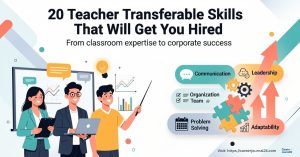
The good news is that the job market is more welcoming to career switchers than ever before. Companies recognize the immense value of transferable skills, those foundational abilities you’ve honed in your previous role, like project management, problem-solving, or communication, which can be applied anywhere. Making a successful jump isn’t about erasing your past; it’s about translating it into an asset for your future. This article will break down the most promising and in-demand fields for your second act, offer practical advice for a smooth transition, and show you how to leverage your existing experience into a truly fulfilling and lucrative new role.
Why Career Changes Are More Common (and Possible) Than Ever
Career changes aren’t rare anymore. In fact, the Bureau of Labor Statistics says the average person changes jobs 12 times in their lifetime. Why? Because work isn’t just about a paycheck, it’s about purpose, flexibility, and growth.
Maybe you’re tired of long commutes. Maybe your old job doesn’t use your strengths. Or maybe you want to work from home and spend more time with family. Whatever your reason, best jobs for career changers often offer better work-life balance and room to grow.
And here’s the good news: you don’t need to go back to school for four years. Many high paying jobs for career changers require certifications or boot camps, some even take just a few months. For example, learning to code or becoming a certified project manager can open doors fast.
Think of it like upgrading your phone. You don’t throw it away, you install new apps and features. Your skills are your apps. A career change is just installing new ones.
Best Jobs for Career Changers
Let’s talk about the best jobs for career changers, roles that welcome newcomers and value diverse backgrounds.
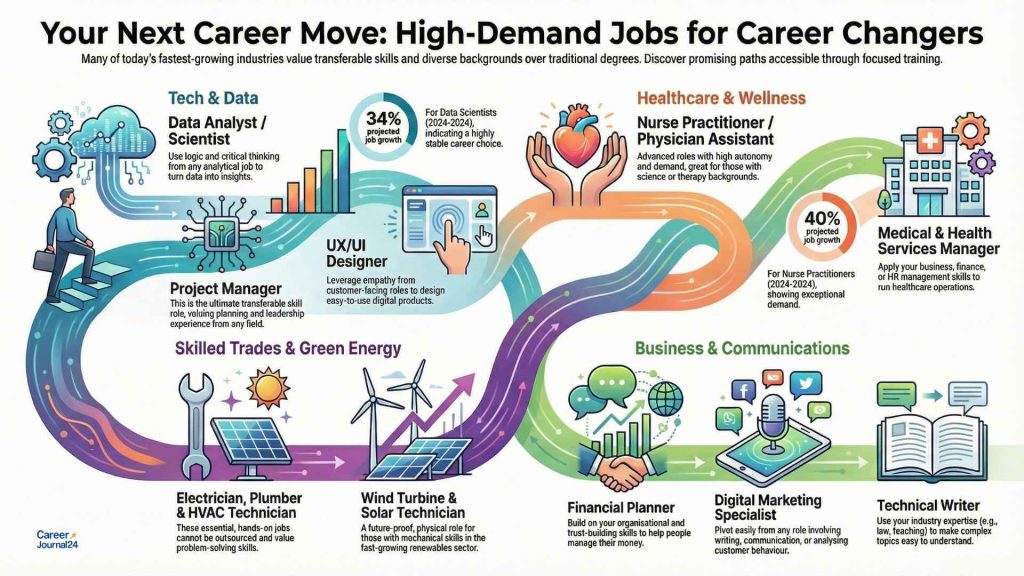
A. Tech & Data
It’s no secret that the tech industry is a hotspot for high earning potential and job growth. What’s often surprising to career changers is how accessible it is, even without a Computer Science degree. Many of the high paying jobs for career changers in tech prioritize specialized, in-demand skills that can be acquired through bootcamps or certifications, not just four-year degrees.
1. Data Analyst / Data Scientist
- What they do: They turn raw numbers into clear, actionable business insights. Think of them as the detectives of the corporate world, using data to solve mysteries like “Why are customers leaving our website?” or “Which product should we launch next?”
- Why it’s great for changers: This role deeply values logic, curiosity, and critical thinking skills you likely already have from any analytical job (finance, research, operations). You don’t need to be a coding whiz initially; proficiency in tools like Excel, SQL, and data visualization is often the starting point.
- Fact: The U.S. Bureau of Labor Statistics projects a job growth of 34% for Data Scientists from 2024–2034, which is significantly faster than the average for all occupations, underscoring its stability as a career change option. (Source: BLS)
- Actionable Tip: Start with a free or low-cost online course in SQL and Python. Build a small personal project (e.g., analyzing local housing data or sports statistics) and add it to your portfolio.
2. Project Manager (PM)
- What they do: PMs are the shepherds of a project, ensuring it’s completed on time, within budget, and meets its goals. They are the bridge between technical and business teams.
- Why it’s great for changers: This is arguably the ultimate transferable skill job. If you’ve ever planned a large event, managed a major home renovation, or led a complex team initiative at your old job, you’ve been a project manager. Your previous industry experience (e.g., healthcare, finance, or construction) becomes a major advantage when you manage projects in that same field.
- Actionable Tip: Obtain a foundational certification like the Certified Associate in Project Management (CAPM) or a specialized certification like Scrum Master. Companies often pay a premium for certified managers.
3. UX/UI Designer (User Experience/User Interface)
- What they do: UX Designers ensure a product (like an app or website) is easy and intuitive to use. UI Designers focus on the visual look and feel. They design the journey, not just the button.
- Why it’s great for changers: This role requires empathy and a deep understanding of human psychology skills refined in customer-facing roles, sales, or even teaching. It’s a creative field with a strong analytical backbone.
- Actionable Tip: Focus on building a portfolio that showcases your thought process, not just pretty visuals. Document your user research and problem-solving steps. Look for introductory courses on platforms like Coursera or CareerFoundry.
B. Healthcare & Wellness
If your current job feels isolating, the healthcare and wellness sector offers an abundance of good jobs for career changers who thrive on human connection and making a tangible difference. Many roles offer clear certification pathways that provide a faster entry than a traditional four-year degree, making them excellent career pivots.
4. Nurse Practitioner (NP) / Physician Assistant (PA)
- What they do: These are advanced practice roles that involve diagnosing, treating, and managing patient care. They have significant autonomy, often acting as primary care providers.
- Why it’s great for changers: While demanding (often requiring a master’s degree), this field offers some of the highest paying jobs for career changers, especially those coming from other science, military, or therapy backgrounds. The demand is exceptionally high, with a projected growth of 40% for NPs from 2024–2034. (Source: BLS)
- Actionable Tip: If you have an existing bachelor’s degree in a non-nursing field, look into Accelerated Bachelor of Science in Nursing (ABSN) programs, which condense the coursework into a shorter timeframe.
5. Medical and Health Services Manager
- What they do: They plan, direct, and coordinate the business activities of healthcare providers, from hospitals to group practices. They manage budgets, staff, and regulatory compliance.
- Why it’s great for changers: If you have a background in management, finance, or human resources from any industry, your skills are perfectly suited here. You don’t need clinical experience; you need to know how to run a business. This is a top-tier option for a high paying job for career changers that leans on corporate experience.
- Actionable Tip: Research the requirements for a master’s in Healthcare Administration (MHA) or explore certifications in medical practice management.
C. Business & Finance
Some of the best jobs for career changers are those that allow you to take the vast industry knowledge you’ve accumulated and apply it in a new capacity.
6. Financial Planner / Advisor
- What they do: They help individuals and families manage their money, plan for retirement, invest, and budget for major life events.
- Why it’s great for changers: If you were an organized, detail-oriented professional in a non-financial role (like a paralegal or an operations coordinator), you already have the trust-building and analytical skills needed. The focus here is less on high-level trading and more on personal relationship management and clear advice.
- Actionable Tip: To move into this role, you’ll typically need to pass the Series 65 or Series 66 exams, and ideally, work toward the prestigious Certified Financial Planner (CFP) designation, which provides a significant competitive edge and income boost.
7. Digital Marketing Specialist
- What they do: They use online channels (SEO, social media, email) to build brand awareness, drive traffic, and generate sales.
- Why it’s great for changers: This field values creativity, written communication, and an understanding of consumer behavior. If your old job involved writing emails, managing a social account, or analyzing customer trends, you can pivot easily. The barrier to entry is low, with many free Google and HubSpot certifications available.
- Actionable Tip: Start a simple blog or a dedicated social media account about a niche topic you love. Treat it like a client project and use it as a case study in your portfolio to demonstrate your skills in SEO, content creation, and analytics. For more guidance on strategy, check out resources from the Digital Marketing Institute.
D. Skilled Trades
For career changers who prefer to work with their hands, value tangible results, and want a path that requires more specialized training than a four-year degree, the skilled trades offer some of the most stable and high paying jobs for career changers. There is a massive demand for skilled professionals like electricians, plumbers, and HVAC technicians-roles that cannot be outsourced or automated.
8. Electrician / Plumber / HVAC Technician
- What they do: These essential trades professionals install, repair, and maintain the infrastructure that makes modern life possible, from the wiring in your walls (electrician) to the pipes under your sink (plumber) and the climate control in your office (HVAC).
- Why it’s great for changers: If your previous career involved precision, following complex diagrams, troubleshooting, or just a general mechanical aptitude (think former factory workers, military personnel, or even hobbyist builders), you have a significant head start. These jobs value reliability, problem-solving, and a systematic approach to fixing things. They are excellent good jobs for career changers because the path is clear: apprenticeship, certification, and then self-employment or specialized union work, leading to high wages.
- Fact: Many specialized trades, particularly those in high-demand industrial sectors or union-represented construction roles, can quickly surpass the median income of many college-educated white-collar jobs. For instance, Elevator Installers and Repairers consistently rank among the highest-paid trades due to the complexity and safety requirements of the job.
- Actionable Tip: Contact your local trade union or community college to inquire about certified apprenticeship programs. These programs allow you to earn while you learn, providing practical, paid experience alongside classroom instruction.
9. Wind Turbine Technician / Solar Installer
- What they do: These specialists are the backbone of the burgeoning renewable energy sector. They install, inspect, and maintain the huge wind turbines and solar panel arrays that generate clean power.
- Why it’s great for changers: The clean energy sector is expanding rapidly, creating entirely new, future-proof roles. A background in mechanics, electronics, or even basic construction offers transferable skills. This is a perfect pivot for someone who wants a physical, outdoor job with a mission.
- Actionable Tip: Look for focused, post-secondary non-degree awards or vocational certifications. The job outlook for Wind Turbine Technicians, in particular, has been cited as one of the fastest-growing occupations, making it a reliable choice for long-term career stability in a dynamic sector. For more information on training opportunities in the green economy, search for resources from the Interstate Renewable Energy Council (IREC).
E. Creative & Communications
The idea that creative fields don’t offer good jobs for career changers is a myth. In fact, companies are increasingly recognizing that the value of human creativity, especially when paired with technical understanding, is invaluable. This section is ideal for those whose previous jobs relied on communication, persuasion, or artistic expression.
10. Technical Writer / Content Strategist
- What they do: Technical Writers translate complex, technical information (like software manuals, medical procedures, or engineering specifications) into clear, easily digestible language for the end-user. Content Strategists plan, create, and manage content (articles, videos, guides) that helps a business achieve its marketing or user-education goals.
- Why it’s great for changers: Were you a lawyer who had to simplify complex legal documents? A teacher who broke down challenging concepts for students? A former journalist, copywriter, or marketing professional? These roles directly leverage your existing expertise in clarity, structure, and audience analysis. Your ability to understand a specific industry (Finance, Healthcare, Tech) from your prior career makes you a highly valued subject matter expert as a writer.
- Actionable Tip: Compile a portfolio demonstrating your clarity and ability to explain complex ideas. This could include a simplified user guide for a product you use every day, a blog post breaking down a financial concept, or even a compelling pitch deck.
11. User Researcher / Creative Project Manager
- What they do: User Researchers are the voice of the customer in the design process, conducting interviews, surveys, and usability tests to understand how people interact with a product. A Creative Project Manager is a specialized PM who guides marketing campaigns, video production, or design teams, balancing creative vision with logistical realities.
- Why it’s great for changers: These roles are perfect for “people people.” Your skills in empathy, interviewing, conflict resolution, and organization are the primary assets. A former social worker, sales executive, or HR manager could pivot beautifully into User Research because they already know how to ask probing questions and listen actively. Similarly, a former operations manager has the perfect skill set for managing creative timelines and budgets.
- Actionable Tip: To get started in User Research, focus on courses or books that teach qualitative and quantitative research methods. Offer to conduct a small-scale “user research” project for a local business to demonstrate your methodology and insights. This shows you can apply personal, relatable experiences to a professional setting, a hallmark of all good jobs for career changers.
Choosing the Right Job & Making the Switch
It is one thing to dream about a new career, but it is another thing entirely to navigate the logistics of getting there. With so many good jobs for career changers available, the sheer volume of options can lead to “analysis paralysis.” You might feel stuck staring at job boards, unsure of which direction to take. To move forward, you need a strategy that breaks the process down into two distinct phases: choosing the right path and then executing the switch.
A. How to Choose the Right Job for You
Before you start sending out applications, you need to audit yourself. Finding the right fit is a process of elimination and discovery. Here is a simple framework to narrow down your options:
1. Inventory Your “Hidden” Skills
Most people underestimate what they can do. Start by listing everything you are good at, not just what was in your last job description. Are you the person who organizes the family reunion? That is logistics and event planning. Do you manage a chaotic household? That is conflict resolution and time management.
Write down skills from past jobs, hobbies, volunteer work, or even parenting. You are looking for patterns. If you realize you love fixing things but hate sitting in meetings, that eliminates half the corporate world and points you toward trades or technical roles. This inventory creates the foundation for identifying good jobs for career changers that you are actually qualified for.
2. Define Your Priorities
Be honest about what drives you. Are you looking for high paying jobs for career changers like data analysis or software sales because you have financial goals to hit? Or are you at a stage where purpose matters more than the paycheck, steering you toward teaching, counseling, or non-profit work?
There is no wrong answer, but you must know the answer. The best jobs for career changers aren’t just about the salary; they are about the “fit.” I once spoke with a man who left a prestigious, high-stress law career to become a carpenter. On paper, he makes less money now. But in reality, he is infinitely happier because he spends his days building tangible things with his hands rather than arguing over paperwork. Know what “success” looks like to you before you start looking.
3. The “Try Before You Buy” Method
You wouldn’t buy a car without a test drive, so don’t commit to a new career without testing it. The gig economy makes this easier than ever. If you think you want to be a graphic designer or a copywriter, try picking up a small gig on platforms like Upwork or Fiverr.
Volunteering is another low-risk way to test the waters. Thinking about a career in event management? Try volunteering to help organize a local charity run. The fast pace, pressure, and excitement will quickly show you whether the role suits you. Enjoying the stress and energy is a good sign you’re on the right path. Hating it, on the other hand, means you’ve just saved yourself years in a career that isn’t the right fit.
4. Informational Interviews
The internet is great, but human insight is better. Reach out to people currently working in the fields you are interested in. LinkedIn is a powerful tool for this. Send a polite message asking for 15 minutes of their time. Ask questions like, “What does a typical Tuesday look like for you?” or “How did you get your foot in the door?”
You will find that most people are happy to share their stories. This reality check helps you see past the glamorous job description to the actual day-to-day work.
B. Practical Steps to Make the Switch
Once you have identified the target, you need to fire the arrow. Changing careers isn’t magic; it is planning and action. Here is how to execute the pivot:
1. Update Your Resume
Your old resume won’t work for a new industry. You need to pivot from a “chronological” resume (which highlights dates) to a “functional” resume (which highlights skills). Stop focusing on job titles that don’t make sense to your new employer.
Instead, use action words that show impact. Words like “managed,” “created,” and “solved” are universal. Tailor your resume for every single job application. If the job description asks for “client relations,” ensure your resume uses that exact phrase, even if you previously called it “customer service.”
2. Digital Branding on LinkedIn
Recruiters will Google you. When they do, your LinkedIn profile needs to tell the story of where you are going, not just where you have been. Update your headline to reflect your ambition, such as “Aspiring Digital Marketer | Content Creator” rather than just “Former Teacher.”
Add a professional photo, no selfies in the car. Write a summary that connects the dots between your past experience and your future goals. Share articles relevant to your new industry to show you are engaged and knowledgeable.
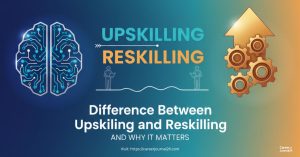
3. Strategic Upskilling
You don’t always need a second university degree. We live in the golden age of self-education. Use free or low-cost resources to fill the gaps in your knowledge:
- Coursera: Great for Google Certificates and Project Management basics.
- edX: Offers courses from heavy hitters like Harvard and MIT.
- YouTube: An underrated resource for free tutorials on everything from coding to Excel.
- LinkedIn Learning: Excellent for soft skills and business trends.
Completing these courses shows potential employers that you are self-motivated and capable of learning new systems quickly.
4. Network Like Your Career Depends on It (Because It Does)
The statistic is often cited for a reason: Forbes notes that networking leads to roughly 80% of jobs. Many positions are filled before they are ever posted on a job board. You need to tap into this “hidden job market.”
Tell everyone you know that you are changing careers. Your neighbor, your dentist, or your old college roommate might know someone hiring. Join local meetups or online Facebook groups related to your new field. Genuine networking isn’t asking for a job; it’s building relationships.
5. Start Small to Build Momentum
You don’t have to jump into a senior role immediately. Look for internships, freelance contracts, or part-time work. These “micro-experiences” build your confidence and your portfolio. They prove to employers that you can do the work, effectively removing the risk from hiring a career changer. Every small step is evidence that you are ready for the big leap.
Specialized Roles for Specific Backgrounds
Sometimes the best pivot is a slight turn rather than a U-turn. Here are a few more specific ideas based on where you might be coming from.
If you come from Hospitality (Servers, Bartenders, Hotel Staff):
Look into Customer Success Manager roles. Software companies (SaaS) sell subscriptions. They need people to keep those clients happy so they renew next year. You are an expert in keeping people happy and putting out fires. This is a corporate role with benefits that relies entirely on the social intelligence you built waiting tables.
If you come from Manual Labor or Trades:
Consider Occupational Health and Safety. You know the dangers of a job site better than anyone. Companies need safety officers to ensure compliance and train staff. It takes you off the tools and saves your back, but keeps you in an environment you understand.
If you come from Administration:
Look at Human Resources (HR). HR isn’t just hiring and firing. It’s about benefits, payroll, and conflict resolution. Your organizational skills are the core requirement here.
Overcoming the “Overqualified” Label
One fear career changers face is being told they are “overqualified.” This is usually code for “we think you will get bored and leave” or “we think you want too much money.”
To combat this, you need to control the narrative in your cover letter and interview. Address it head-on. Explain that you are looking for a new challenge and that you are willing to step back in seniority to learn a new industry. Make it clear that you are looking for longevity. When an employer sees that you are humble enough to learn but experienced enough to be professional, the “overqualified” label often disappears.
The Role of Continuous Learning
The defining characteristic of best jobs for career changers is that they usually require a mindset of continuous learning. The world moves too fast now to rely on what you learned in college 15 years ago.
You don’t always need a new degree, but you do need to show you are “upskilling.” Platforms like Coursera, Udemy, or LinkedIn Learning are fantastic resources. Completing a course shows initiative. It tells a hiring manager, “I am serious about this change, and I am willing to put in the work.”
Conclusion: Your Next Chapter
Changing careers is not an admission of failure. It is an act of hope. It is admitting that you have grown and that your needs have changed. Whether you are chasing high paying jobs for career changers in the tech sector, or looking for the creative fulfillment of marketing, the path is open.
Start small. Update your resume to highlight skills, not just duties. Send that LinkedIn message. Take that free online course on Saturday morning. You have spent enough time dreading Monday mornings. It is time to find work that feels less like a sentence and more like a choice. You have the experience; now you just need the direction.



2 Comments