
How to Become a Pet Sitter: Easy Steps for Beginners
Ever dreamed of spending your days with fluffy dogs, playful cats, and maybe even a quirky bird or two, all while earning a flexible income? If you’re an animal lover wondering how to become a pet sitter, you’re in the right place. This guide breaks it down into simple, actionable steps that anyone can follow, even if you have zero experience. We’ll cover everything from starting with no background to landing gigs on popular apps like Rover, going pro, and getting certified. Pet sitting isn’t just a side hustle; it’s a rewarding career where you set your own hours and build real connections with pets and their owners. In the U.S. alone, the pet care industry is booming, with over 70% of households owning pets and sitters earning an average of $15-30 per hour. Ready to turn your love for animals into a paycheck? Let’s dive in.
What a Pet Sitter Really Does
A pet sitter is someone who takes care of pets when their owners are away or unavailable. This may sound simple, but in reality, it involves trust, responsibility, and consistency.
On a typical day, a pet sitter might feed pets, refill water bowls, clean litter boxes, take dogs for walks, give medications, or simply spend time playing with and comforting animals. Some pet sitters work from their own homes, while others visit the client’s house or stay overnight.
For example, imagine a working couple who leaves home early and returns late. They may hire a pet sitter to walk their dog in the afternoon and make sure it’s not alone all day. That small service can make a huge difference in both the pet’s wellbeing and the owner’s peace of mind.
Why Pet Sitting Makes a Great Career Choice
Pet sitting offers freedom that few jobs can match. Imagine waking up to walk a golden retriever in the park or cuddling a kitten while catching up on your favorite show, all from the comfort of someone else’s home or your own. It’s perfect for students, parents, retirees, or aspiring solopreneurs who crave variety over a desk job.
What draws people in? Flexibility tops the list. You choose your clients, rates, and schedule, whether it’s overnight stays, daily check-ins, or dog walking. Plus, it’s a low-barrier entry. Unlike veterinary work, you don’t need years of school. I started as a favor for neighbors and quickly realized it could be my full-time gig. Today, platforms report millions of pet owners seeking reliable sitters, especially post-pandemic, when travel is back.
The perks extend beyond money. You’ll gain skills like responsibility, empathy, and basic pet health knowledge. It’s also therapeutic; studies show interacting with animals reduces stress. If you’re passionate about pets, this path feels less like work and more like play.
How to Become a Pet Sitter With No Experience
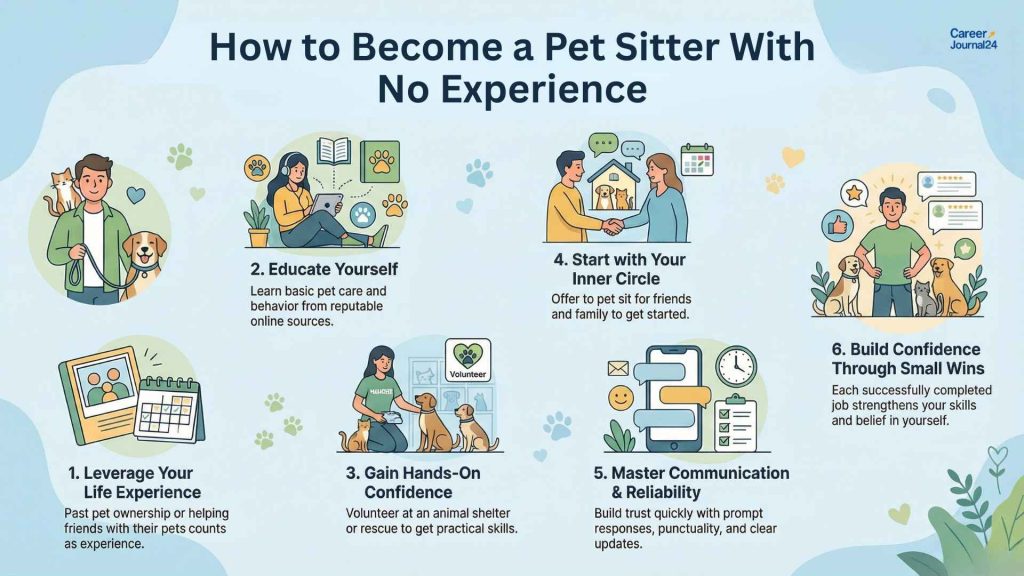
One of the most common concerns beginners have is how to become a pet sitter with no experience. The good news is that formal experience is not always required. What matters more is reliability, basic knowledge, and genuine care for animals. Many successful pet sitters started with nothing more than everyday exposure to pets and gradually built trust through small, consistent actions.
1. Recognize everyday pet experiences
Start by reflecting on your own life and daily routines. If you have ever owned a pet, even years ago, you already understand basic responsibilities like feeding, cleaning, and observing behavior. Helping a neighbor walk their dog or checking in on a friend’s cat during the weekend also counts as experience. These moments show familiarity with animals and can be confidently shared with potential clients as real-world exposure, even if it wasn’t paid work.
2. Learn basic pet care on your own
When you lack formal experience, self-learning becomes your strongest advantage. Reading articles, watching vet-approved videos, or following reputable pet care websites can help you understand animal behavior, common health signs, and daily care needs. For example, learning why dogs pull on leashes or how cats react to stress helps you act calmly and responsibly when situations arise. This knowledge builds confidence and shows clients you take pet care seriously.
3. Volunteer to gain hands-on confidence
Volunteering at animal shelters, rescue centers, or local clinics is one of the fastest ways to gain practical experience. These environments expose you to different breeds, temperaments, and routines. Even a few hours a week can teach you how to handle anxious animals, follow care instructions, and maintain safety. When clients ask about your background, volunteering demonstrates initiative and real commitment.
4. Start with people you already know
Offering pet sitting services to friends, family members, or neighbors is a low-pressure way to begin. These people already trust you, making it easier to gain your first opportunities. For instance, watching a friend’s dog during a short vacation helps you experience responsibility without fear of judgment. Once the job is done, ask for honest feedback or a short testimonial to support your future applications.
5. Practice communication and reliability
For beginners, how you communicate often matters more than experience. Responding quickly to messages, following instructions carefully, and giving simple updates builds trust fast. If you say you’ll arrive at a certain time, being punctual shows professionalism. Clients remember reliability, and many are willing to hire new sitters if they feel their pets are in safe, dependable hands.
6. Build confidence through small wins
Confidence grows with action, not perfection. Each small job you complete successfully strengthens your skills and belief in yourself. Maybe the first pet you sit hides under the bed or refuses to eat at first. Learning how to stay calm and patient in these moments is valuable experience. Over time, these small wins add up, helping you transition from a beginner into a capable, trusted pet sitter.
Earning Pet Sitting Certifications
Going certified sets you apart in a crowded field. Certifications aren’t always required, but they build trust fast. How to become a certified pet sitter starts with reputable programs.
Pet Sitters International (PSI) offers the Certified Professional Pet Sitter (CPPS) designation. It covers business skills, animal care, and ethics, and is completed online for about $200-400. Expect quizzes on nutrition, behavior, and emergencies.
For hands-on, try Fear Free Pets certification, focusing on low-stress handling. It’s ideal for anxious pets. Local community colleges often have affordable courses too. I got my PSI cert after six weeks; clients immediately saw me as a pro.
Why bother? Certified sitters charge 20-50% more. A quick Google shows owners prefer credentialed pros, especially for meds or special needs pets. Renewals keep you sharp, and many include insurance perks.
Joining Platforms Like Rover to Launch Fast
Platforms make entry seamless. How to become a pet sitter on Rover is straightforward and beginner-friendly.
Sign up at Rover.com, upload a profile photo (with pets if possible), and complete a quiz on pet care. Background checks cost $25 but are non-negotiable; think of it as your entry ticket.
Rover handles payments and insurance up to $1 million, so you focus on fun. Set your rates: Newbies start at $15-20 per visit; experienced hit $40+. Services include boarding, drop-ins, and walks. The app matches you with local requests.
Customize your profile with stories. “I grew up with rescue cats and love hikes with dogs.” Add test badges by sitting for friends first. My first Rover gig was a goldendoodle overnight. I earned $80 and five stars. Reviews snowball; aim for quick responses (under an hour) to climb rankings.
Beyond Rover, check Wag or Care.com. Diversify to avoid dry spells.
Building Skills for Professional Pet Sitting
Transitioning to professional pet sitter status means leveling up habits and tools.
Master scheduling with apps like Time To Pet or Google Calendar. Track meds, feeding times, and potty breaks meticulously; owners love detailed updates via photos.
Safety first: Learn breed basics. Pit bulls are sweethearts, not monsters; chihuahuas can be feisty. Stock a kit: leashes, waste bags, treats, thermometer, tick remover. Invest $50 upfront.
Business-wise, form an LLC if scaling (use LegalZoom for ease). Get liability insurance, $100-300/year from PSI providers. Price smart: $20-30 drops-ins, $50-100 overnights.
Network locally. Join Facebook groups like “Pet Sitters of [Your City]” or attend pet fairs. Hand out cards at dog parks. One pro tip: Offer meet-and-greets. Invite potentials over to vibe-check you with their pet.
Handle challenges gracefully. Motion sickness? Acclimate slowly. Separation anxiety? Calming music works wonders. Share your “wins” on social media, Instagram reels of happy walks attract clients organically.
Growing Your Pet Sitting Business
Once gigs roll in, scale up. Treat it like a business: Track income with QuickBooks or a simple spreadsheet. Aim for 20-30 hours weekly to hit $2,000+ monthly.
Hire help as you grow, subcontractors via platforms. Create packages: “Puppy Pamper Week” with extra playtime.
Marketing shines here. Build a free website on Squarespace with testimonials. Email newsletters via Mailchimp keep clients loyal. SEO your Google Business Profile with keywords like “reliable pet sitter near me.”
Seasonal boosts: Holidays mean travel booms. Offer boarding packages early. Repeat clients are gold; 80% of my income is from regulars.
Measure success: Not just dollars, but joy. That wagging tail after a long day? Priceless.
Common Challenges and How to Overcome Them
Every sitter faces hurdles. Weather woes? Invest in raincoats and booties. Picky eaters? Mix flavors gradually.
Client no-shows? Contracts clarify policies, and late fees help. Burnout? Set boundaries, like no Sundays.
Legal stuff: Follow zoning laws for in-home boarding. Taxes? Deduct mileage, supplies, Uncle Sam loves pet pros.
Stay insured and bonded. If a pet escapes (rare with good fences), coverage saves you.
Learn continuously. Podcasts like “Pet Boss Nation” offer gems from vets and owners.
Your First Steps Today
Becoming a pet sitter transforms hobby into hustle. Recap: Gain basics at home, certify for credibility, join Rover for quick wins, then professionalize with tools and marketing.
No experience? No problem, start volunteering tomorrow. Download Rover tonight. Your furry clients await.
What’s holding you back? Share in comments, I’d love to hear your journey. Ready to wag those tails? Go get ’em!