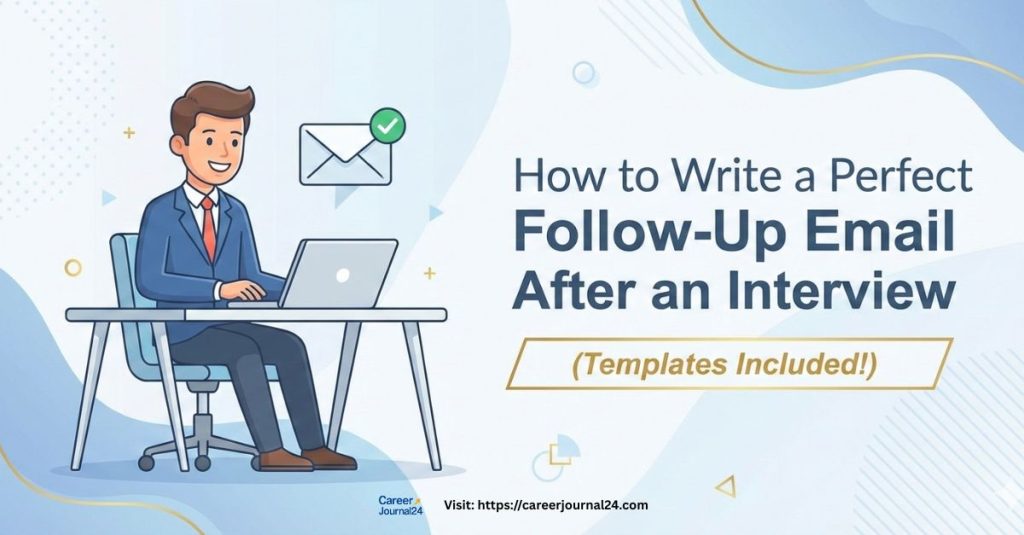
How to Write a Perfect Follow-Up Email After an Interview (Templates Included!)
Waiting after an interview can feel uncomfortable. You replay your answers, wonder how you compared to other candidates, and keep checking your inbox. This is exactly where a follow up email after interview becomes powerful, not as a pushy reminder, but as a professional signal of interest, clarity, and confidence.
A well-timed, well-written follow-up can reinforce your value, refresh the interviewer’s memory, and even revive stalled hiring decisions. In this guide, you’ll learn how to write a follow up email after an interview, when to send it, what to say in different situations, and how to avoid common mistakes, using simple language and everyday examples that actually work.
How to Write a Follow Up Email After an Interview
Writing a follow‑up doesn’t require a novel, just clarity, sincerity, and professionalism. Follow this 6‑step blueprint to craft a follow‑up thank‑you email after interview that gets remembered.
1. Send It Within 24 Hours
The sooner, the better! A fresh conversation stays top‑of‑mind for the interviewer. Aim to hit “send” within 24 hours of leaving the interview. This shows enthusiasm and respect for their time.
2. Use a Clear, Friendly Subject Line
Your subject line is the first thing they see. Keep it simple and professional:
- “Thank You – [Your Name]”
- “Great Speaking With You – [Your Name]”
- “Follow‑Up: [Job Title] Interview”
3. Open With a Genuine Thank‑You
Start by thanking them for their time. Mention the interviewer’s name, the role, and the interview date.
“Hi Maria,
Thank you so much for taking the time to speak with me yesterday about the Content Manager position at BrightFuture Media.”
4. Add ONE Specific Detail
This is crucial. Reference something unique from your conversation. It proves you were fully present and genuinely interested.
“I especially enjoyed hearing about BrightFuture’s new podcast series launching next quarter. The focus on sustainability storytelling aligns perfectly with the campaign I led at GreenLeaf Studios, which increased listener engagement by 27%.”
5. Re‑affirm Your Interest & Fit
In one sentence, remind them why you’re a great match. Connect a skill or experience to the job’s requirements.
“I’m even more excited about this opportunity after learning how the team values data‑driven content, a skill I’ve honed over three years using Google Analytics and HubSpot.”
6. Close With a Low‑Pressure Call‑to‑Action
Invite further conversation without sounding pushy.
“Please let me know if you’d like any additional information or samples of my work. I’m happy to hop on a quick call anytime.”
7. Professional Sign‑Off
End with a friendly closing, your full name, phone number, and LinkedIn profile (optional).
Kind regards,
Jordan Lee
(555) 123‑4567
linkedin.com/in/jordanlee
Template Interview Follow Up Email You Can Copy & Paste
While personalization is key, having a solid framework helps you get started. Below are several templates designed for different scenarios. You can use these as a foundation and tweak them to fit your specific voice and situation. Whether you need a standard thank-you or a gentle nudge after silence, having a template interview follow up email ready saves you time and anxiety. Use this template as your foundation, and remember to personalize every bracketed [ ] section.
1. Follow Up Thank You Email After Interview Example
This is the standard, must-send email. It should go out within 24 hours of your conversation. The goal here is gratitude and reinforcement of your interest.
Subject: Thank you / Great meeting you – [Your Name] – [Job Title]
Dear [Interviewer Name],
Thank you so much for taking the time to speak with me [yesterday/today] about the [Job Title] position at [Company Name]. I truly enjoyed learning more about the team and your work on [mention a specific project, team goal, or aspect of the role discussed].
I was especially interested in our conversation about [mention a specific topic, e.g., “improving client retention rates”]. My experience in [mention your relevant skill or experience] at [Your Previous Company] has given me a strong foundation that I believe would allow me to contribute effectively in this area.
The position seems like an excellent match for my skills and career goals, and I remain very enthusiastic about the opportunity to join [Company Name] and help [mention a company goal or mission].
Thank you again for your time and consideration. I look forward to hearing about the next steps.
Best regards,
[Your Full Name]
[Your Phone Number]
[Link to Your LinkedIn Profile]
This follow up thank you email after an interview works because it is polite, concise, and reminds them of a specific value you bring to the table.
2. Short and Sweet Follow-Up Email After Interview Sample
Sometimes, the company culture is very casual, or perhaps you had a quick initial phone screening rather than a full formal interview. In these cases, a long letter might feel out of place. You need a short and sweet follow-up email after an interview sample that matches the vibe.
Subject: Great Speaking With You!
Hi [Interviewer’s Name],
Just a quick note to say thank you for interviewing me for the [Job Title] position yesterday. I enjoyed our conversation and am very interested in joining [Company Name]!
I am even more enthusiastic about the opportunity after speaking with you. Looking forward to the next steps! Please let me know if you need anything further.
Best,
[Your Name]
This approach respects their time while still ticking the box of professionalism. It is confident and breezy, which can be very effective in startups or fast-paced industries.
3. 2nd Interview Follow Up Email Example
A second interview follow-up should reflect the deeper relationship you’re building. Reference specifics from your latest talk.
Dear [Interviewer Name],
Thank you for the opportunity to speak with you again yesterday. I really appreciated the deep dive into the department’s strategy for the coming year.
Our discussion about [Specific Challenge discussed] got me thinking. In my previous role, we tackled a similar issue by [Brief Solution], and I would love to bring that same problem-solving approach to your team.
I remain very interested in the position and confident that I can contribute to [Company Name]’s success. I look forward to hearing from you soon.
Best regards,
[Your Name]
Notice how this 2nd interview follow up email example adds value? It offers a glimpse of how you work, acting almost like a mini-work sample.
4. Follow Up Email After No Response From Interview
This is the scenario that causes the most stress. You thought it went well, but days have passed, and your inbox is empty. First, don’t panic. Silence doesn’t always mean rejection. People get sick, budgets get frozen, or decision-makers go on vacation. A polite follow up email after no response from the interview acts as a gentle nudge.
Subject: Checking In – [Job Title] Position
Dear Mr. Davies,
I hope you are having a great week.
I hope you are having a productive week. I am writing to follow up on my application for the [Job Title] position, as I remain very interested in the opportunity.
I understand schedules can be hectic, and I simply wanted to check if there is any update on the timeline or if you require any additional information from my side.
Thank you for your time and consideration.
Best regards,
[Your Name]
Keep it pressure-free. You are not demanding an answer; you are asking for a timeline update. This keeps the relationship positive.
5. Interview Follow-Up Email After 2 Weeks
If a significant amount of time has passed, say, 10 to 14 days, without a word, the dynamic changes. An interview follow-up email after 2 weeks is often your final attempt to get clarity. At this stage, it is acceptable to be direct but polite, asking for closure so you can move on if necessary.
Subject: Following Up – [Your Name] Candidacy for [Job Title]
Dear [Interviewer Name],
I hope all is well.
It has been a couple of weeks since our last conversation, and I wanted to circle back regarding the [Job Title] role. I am still very excited about the possibility of joining the team.
Do you have an update on the status of the position? Even if you have decided to move in a different direction, I would appreciate letting me know so I can plan accordingly.
Thank you again for your time and consideration.
Best,
[Your Name]
This template works because it gives the recruiter an “out.” Often, recruiters ghost candidates because they feel guilty about delivering bad news. By explicitly asking for the decision “even if it’s a no,” you make it easier for them to reply.
When Is It Appropriate to Follow Up After an Interview?
Timing is rarely about luck; it is about strategy. Send your email too soon, and you might seem pushy. Send it too late, and they might have already made an offer to someone else. To navigate this effectively, you need to understand that not all follow-ups are created equal. The answer to how long after a job interview should I follow up depends entirely on the type of message you are sending.
1. The 24-Hour Golden Rule
For the initial thank-you note, speed is your ally. The general consensus among recruiters is to send this within 24 hours of the interview. Ideally, you want to land in their inbox while the conversation is still fresh in their memory. If you interviewed on a Tuesday morning, sending a note that afternoon is perfect. If your slot was on a Friday, you have a choice: send it immediately or wait until Monday morning. While a weekend email isn’t a disaster, Monday morning ensures your message is at the top of the pile when they return to work. This immediate touchpoint anchors your presence before they move on to their next task.
2. Respecting the Timeline
When it comes to checking on the status of the hiring decision, the rules change. You must refer back to the timeline they gave you during the interview. If the hiring manager said, “We will have a decision by Tuesday,” do not email them on Tuesday morning. Give them a grace period. Things happen, approvals get delayed, or team members get sick. Waiting until Wednesday afternoon or Thursday morning shows that you respect their process and understand that business delays are normal. It demonstrates patience, which is a highly undervalued soft skill.
3. The “No Timeline” Scenario
If they did not give you a specific date for a decision, you might be wondering when it is appropriate to follow up after an interview without being annoying. A good rule of thumb is to wait five to seven business days after the interview. This gives the team ample time to debrief, interview other candidates, and manage their regular workload. Sending a polite check-in after a week keeps you on their radar without seeming desperate. It signals that you are still interested but also busy enough not to be sitting by the phone every second.
Quick Timing Cheat‑Sheet
| Situation | When to Send Follow‑Up |
|---|---|
| After 1st interview | Within 24 hours |
| After 2nd interview | Within 24 hours |
| Company gave a 10‑day timeline | Day 11 |
| No response after interview | 10–14 days later |
| Still no reply after 2nd follow‑up | Stop; further emails hurt your image |
Common Follow-Up Mistakes to Avoid
Even with the best templates and perfect timing, things can go wrong if you aren’t careful. The interview process is competitive, and sometimes, a small error in judgment during the follow-up phase can turn a “strong hire” into a “hard pass.” To ensure your follow up email after interview lands perfectly, here are five specific pitfalls you need to steer clear of.
1. The Detail Trap: Typos and Names
The absolute quickest way to lose credibility is to spell the interviewer’s name wrong. It sounds obvious, yet it happens constantly. You might be excited to hit send, but if you address “Jon” as “John” or “Michele” as “Michelle,” you are signaling a lack of attention to detail. Before you press send, double-check the spelling against their LinkedIn profile or the calendar invite. Also, if you are using a template, be hyper-vigilant about removing placeholders. Nothing says “I don’t care” quite like sending an email that still says “Dear [Interviewer Name].”
2. Crossing the Line: Persistence vs. Pestering
There is a fine line between being proactive and being aggressive. You want to show enthusiasm, but sending an email every single day will not speed up the process; it will likely get you blocked. If you have sent a thank-you note and one follow-up status check with no response, pause. Sending a third or fourth email rarely changes the outcome positively. Respect the boundaries. If they want to hire you, they will find a way to contact you. Recognizing when to step back preserves your professional reputation for future opportunities with that company.
3. The Vague Subject Line
Recruiters and hiring managers receive hundreds of emails a day. A subject line that simply says “Hi,” “Follow up,” or “Checking in” is likely to get lost in the noise or worse, ignored entirely because it looks like spam. You need to make their life easier. Always include the position you interviewed for and your full name in the subject line, for example: “Follow Up – Marketing Manager – [Your Name].” This allows the recipient to instantly know who you are and what the email is about without even opening it, increasing the chances of a quick reply.
4. The “One Size Fits All” Error
If you were interviewed by a panel or met with multiple people separately, do not send them all the exact same email. It is a common mistake to write one generic “Thank you for your time” note and copy-paste it to three different people. Teams talk. If they forward your emails to each other to add to your candidate file, seeing identical messages makes you look lazy or insincere. Take the extra five minutes to tailor each note slightly. Mention a specific question the finance director asked, and then mention a different topic when writing to the creative director.
5. Making It All About You
While the purpose of the email is to check on your status, phrasing it purely as a demand for information can rub people the wrong way. Avoid emails that sound like, “Have you decided yet?” or “When will I know?” This puts pressure on the interviewer without offering anything in return. Instead, flip the script. Frame your follow-up as an offer of assistance. Phrases like “Please let me know if you need any further portfolio samples” or “I’m happy to clarify any points from our discussion” make you sound helpful and collaborative rather than demanding.
Pro Tip:
If the interviewer asked about an employment gap, don’t ignore it in your follow‑up! Briefly reiterate how you framed it positively during the interview. For example:
“I appreciate your understanding regarding the career break I took in 2021. As I mentioned, that time allowed me to earn my Google Data Analytics certification, a skill I’ve since used to increase reporting efficiency by 22% at my current role. For a full guide on how to present career breaks confidently, see our Employment Gap Resume Sample.”
Final Thoughts
The job search process is a marathon, not a sprint, and the follow-up is a crucial leg of that race. It is easy to feel powerless while you wait for the phone to ring, but writing a thoughtful email is one of the few things you can control.
Remember, the goal isn’t just to ask “Did I get the job?” It is to reinforce the connection you built. Whether you are sending a quick thank-you note or a check-in after two weeks of silence, every communication is a chance to demonstrate your soft skills. You are showing them that you are proactive, polite, and communicative.
So, the next time you sign off from an interview, take a deep breath. Then, open your email draft. Use the templates and tips above to craft a message that is authentic to you. That one small act could be the difference between being forgotten and getting the offer.




One Comment