
Networking Tips for Introverts to Build Powerful Career Connections

Many professionals assume networking requires being outgoing and highly social, but that belief discourages many capable people from building valuable professional connections. In reality, effective networking depends more on preparation, authenticity, and relationship-building than personality type. These networking tips for introverts show that quiet professionals can network successfully without pretending to be someone else.
Whether you are an employee, entrepreneur, or freelancer, opportunities often come through relationships rather than applications or advertisements. Learning how to approach networking comfortably allows introverts to build strong professional circles, gain referrals, and discover opportunities naturally. This guide offers practical, realistic strategies to help introverts network confidently while staying true to themselves.
What are the best networking tips for introverts?
The best networking tips for introverts include preparing simple conversation starters, focusing on meaningful one-on-one conversations, attending smaller networking events, using online platforms like LinkedIn, listening actively, and following up after meetings. Instead of trying to meet many people, introverts benefit from building a few genuine professional relationships that grow naturally over time.
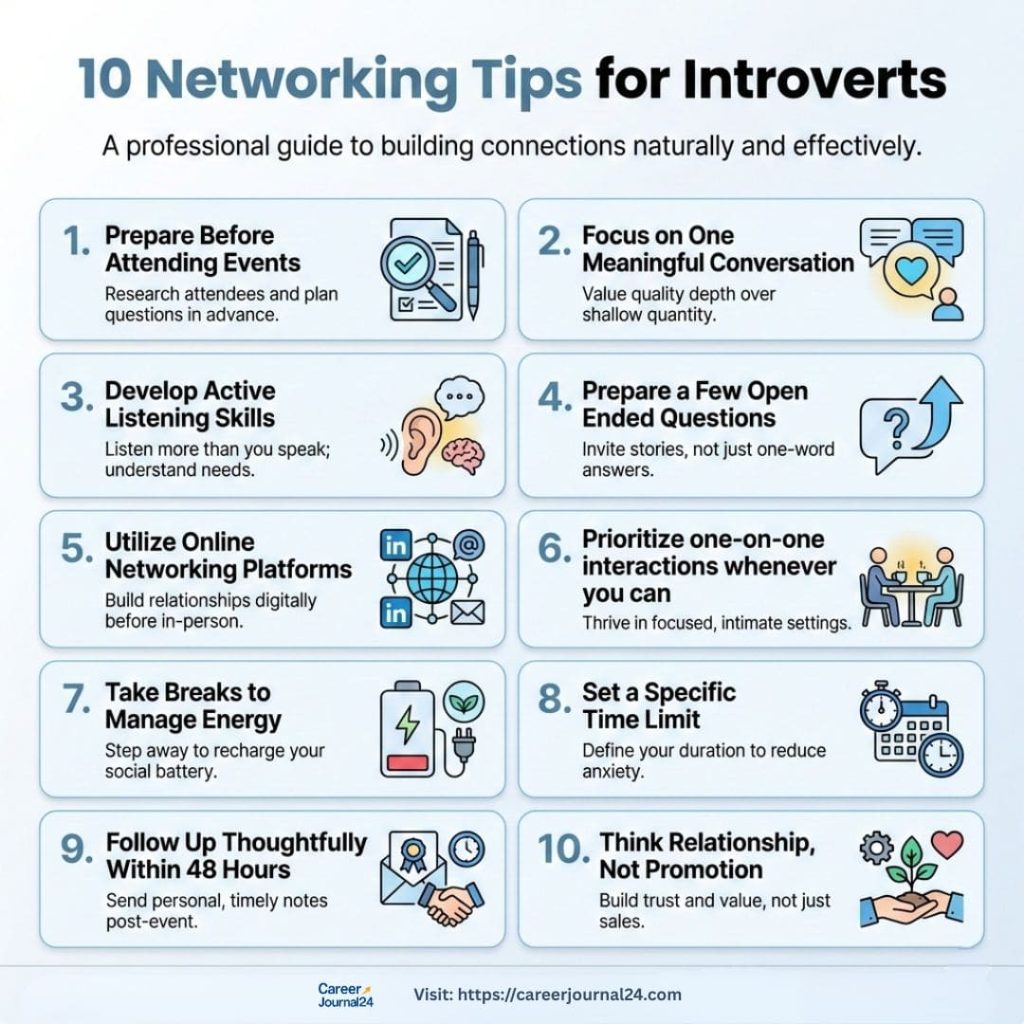
10 Networking Tips for Introverts
Networking does not have to feel uncomfortable or forced for introverts. The key is to use strategies that align with your natural communication style rather than copying extroverted approaches. The following practical tips focus on preparation, meaningful conversations, and sustainable relationship building. Each idea is designed to help introverts network confidently, reduce social pressure, and create professional connections that grow naturally over time.
1. Prepare Before Attending Events
Preparation significantly reduces anxiety for introverts entering networking environments. Before attending an event, research attendees, speakers, or companies participating. Knowing why you are attending also helps focus conversations. Prepare a short and natural self-introduction explaining what you do and what interests you professionally. Additionally, think of two or three simple questions to ask others. Preparation prevents awkward silences and helps conversations flow naturally. When you enter an event with a plan instead of uncertainty, you feel more confident and less pressured, allowing genuine connections to form instead of forced interactions.
2. Focus on One Meaningful Conversation
Introverts often feel pressured to meet many people quickly, but effective networking depends on connection quality rather than quantity. Instead of trying to speak with everyone, focus on having two or three meaningful conversations. Engaging deeply with a few individuals allows trust and rapport to develop naturally. People remember thoughtful interactions more than rushed introductions. When networking as an introvert, aim to learn about others rather than promoting yourself constantly. A single meaningful conversation can later lead to referrals or collaborations, making fewer conversations far more productive than superficial networking attempts.
3. Develop Active Listening Skills
Introverts are naturally gifted at listening, which is a rare and valuable trait in a high-energy business environment. Most people are so focused on what they are going to say next that they fail to truly hear what their counterpart is sharing. By being an active listener, you make the other person feel valued and understood. This builds immediate rapport and trust. You can use this time to gather information about their challenges and goals. Insights from Harvard Business Review career articles suggest that active listening is often more persuasive than speaking, as it allows your contributions to be more relevant and impactful.
4. Prepare a Few Open Ended Questions
Walking into a room with a mental toolkit of questions can significantly reduce the pressure of making small talk. Instead of standard questions that lead to one word answers, try asking things that invite the other person to share a story. You might ask what inspired them to start their current project or what they find most challenging about the current industry trends. These types of questions take the spotlight off you and allow the other person to lead the conversation. This gives you time to process the information and find genuine points of connection without feeling like you have to perform or entertain.
5. Utilize Online Networking Platforms
Online networking platforms offer introverts a comfortable space to build professional relationships without immediate social pressure. LinkedIn allows thoughtful engagement through comments, posts, and direct messages. Joining professional groups and participating in online discussions helps establish visibility gradually. After attending events, connecting online helps maintain relationships without requiring long in-person conversations. Online networking also allows introverts to communicate thoughtfully in writing, which many find easier than spontaneous speaking. Over time, online engagement often leads to offline opportunities, collaborations, or client connections, making digital networking an effective starting point.
6. Prioritize one-on-one interactions whenever you can
Large group settings are the hardest environment for most introverts. You do not have to build your network there. I have built almost my entire network by asking people I have had a good first conversation with to grab a coffee or a walk a few weeks later. One-on-one interactions are where introverts thrive. There is no pressure to perform for a group, no splitting your attention between half a dozen people. You can have an actual conversation at your own pace. Some of my closest professional connections are people I barely spoke to at our first event, but ended up spending an hour with one-on-one a month later.
7. Take Breaks to Manage Energy
Introverts recharge through quiet time, making energy management essential during networking activities. Taking short breaks during events helps prevent exhaustion and allows mental recovery. Stepping outside briefly or finding a quiet space can help you regain focus before rejoining conversations. Networking does not require staying until the event ends. Spending even one productive hour connecting with a few people is effective. Managing energy wisely ensures networking remains sustainable rather than overwhelming, allowing introverts to maintain positive engagement without compromising personal comfort.
8. Set a Specific Time Limit
The fear of being stuck in a social situation indefinitely can be incredibly draining. To combat this, give yourself permission to leave after a set amount of time. You might decide that you will stay for exactly ninety minutes or until you have met three new people. Knowing that there is an end in sight makes the experience feel much more manageable. When you have a finish line, you are more likely to stay engaged and present during the time you are there. Once you hit your goal, you can leave without guilt, knowing that you have fulfilled your professional obligation for the day.
9. Follow Up Thoughtfully Within 48 Hours
The real magic of networking happens after the event. Within two days, send a short personalized message referencing something specific from your conversation. Mention an article they recommended or congratulate them on a recent win. Avoid pitching, focus on appreciation and continuity. A warm, human note stands out in inboxes flooded with generic “Let’s connect!” requests. This gentle follow-up builds trust and keeps the door open for future collaboration without pressure or pushiness.
10. Think Relationship, Not Promotion
Networking becomes easier when seen as relationship-building rather than self-promotion. Instead of focusing on impressing others, focus on learning from them and offering help when possible. People appreciate authenticity more than sales pitches. Conversations become more natural when both sides exchange experiences and insights. Introverts often excel in sincere interactions because they value depth over superficial engagement. Viewing networking as mutual support removes pressure and makes professional connections feel human and meaningful rather than transactional, leading to long-term partnerships and opportunities.
Benefits of Networking for Small Business Owners and Freelancers
For freelancers and small business owners, networking is not just helpful but often essential for consistent business growth. Following the Small Business Administration guides on community engagement, it is clear that strong professional connections lead to referrals and industry knowledge that advertising cannot provide. The following sections detail how networking directly supports business stability and reputation.
1. Increased Client Referrals
Networking significantly increases referrals for small business owners and freelancers. Satisfied contacts often recommend trusted professionals within their own networks. Personal recommendations carry stronger credibility than advertisements or online listings. Over time, referrals become a steady source of clients without additional marketing expenses. Networking helps business owners stay visible among potential collaborators and customers. Relationships built through networking create trust, which directly influences purchasing decisions. Freelancers who consistently maintain professional connections often experience repeat projects and referrals, making networking one of the most cost-effective growth strategies available.
2. Collaboration Opportunities
Networking introduces professionals to others offering complementary services. Collaborations allow freelancers and small business owners to expand service offerings without hiring additional staff. For instance, a web designer collaborating with a content writer can provide clients a complete solution. Following a detailed Solopreneur Guide can help you navigate these partnerships safely. Such partnerships increase revenue potential for both parties while delivering greater value to customers. Collaboration also spreads risk and reduces workload pressure. Professional partnerships often start through casual networking interactions. Over time, these connections evolve into long-term collaborations that help businesses grow sustainably while strengthening professional networks.
3. Improved Industry Awareness
Networking helps business owners stay updated on industry trends and customer expectations. Conversations often reveal market changes earlier than formal reports or articles. Business owners learn what competitors are doing, what clients demand, and where opportunities exist. This knowledge helps professionals adapt strategies quickly. Networking events and discussions often include practical experiences rather than theoretical advice. Real-world insights from peers provide valuable learning opportunities. Entrepreneurs who network consistently stay informed and competitive, allowing them to adjust services or products according to market needs and maintain relevance in evolving industries.
4. Enhanced Business Credibility
Professional visibility improves credibility for freelancers and small business owners. When people repeatedly encounter your name within professional circles, trust builds naturally. Being known within a community increases confidence among potential clients. Networking also allows others to observe your expertise through conversations and shared knowledge. Credibility plays a major role in service-based industries where trust determines hiring decisions. Networking positions professionals as reliable contributors within their industries. Over time, reputation built through consistent professional engagement attracts opportunities without aggressive marketing efforts.
5. Access to Mentorship and Advice
Networking connects entrepreneurs with experienced professionals who provide valuable guidance. Mentors help business owners avoid common mistakes and improve decision-making. Advice from experienced individuals often saves time and money. Networking relationships also create safe spaces to discuss challenges openly. Freelancers benefit from shared experiences regarding pricing, client management, and business growth. Learning directly from others shortens the learning curve for new entrepreneurs. Mentorship often develops naturally through networking rather than formal arrangements, providing long-term professional support and growth opportunities.
6. Long-Term Business Stability
Strong professional networks create long-term stability for small businesses and freelancers. Connections built over time provide recurring work, partnerships, and referrals. Networking reduces dependence on unpredictable advertising or job platforms. Reliable professional relationships often lead to repeat collaborations. Business owners who nurture networks experience smoother business cycles even during market slowdowns. Networking acts as a safety net by maintaining opportunities within professional circles. Long-term relationships formed through networking contribute significantly to sustainable career growth and financial stability.
How to Find Good Networking Events for Small Business Owners
Finding the right networking environment makes a significant difference in networking success, especially for introverts who prefer purposeful interactions. Not every event delivers value, so choosing wisely saves both time and energy. The following methods help entrepreneurs and freelancers discover events where meaningful conversations and business opportunities naturally emerge, making networking more productive and less overwhelming.
1. Use Event Listing Platforms
Online platforms frequently publish professional events suitable for entrepreneurs. Searching platforms that list conferences, workshops, and meetups allows business owners to find events aligned with their industry. Filtering events by business interests ensures better networking results. Event descriptions often show attendee profiles, helping professionals choose relevant gatherings. These platforms simplify event discovery and planning. Attending well-targeted events increases chances of meeting potential collaborators or clients. Entrepreneurs who regularly monitor event listings can identify networking opportunities consistently, helping them build connections in both local and online communities.
2. Join Local Business Associations
Local business associations regularly organize networking meetings and training sessions. Membership often provides access to exclusive professional gatherings. Such events attract serious business owners seeking collaboration rather than casual attendees. Associations also provide ongoing opportunities to build relationships within local markets. Joining these communities creates long-term networking environments instead of one-time events. Entrepreneurs benefit from repeated interactions, which strengthen trust and familiarity. Local associations also share industry insights and business resources, making participation valuable beyond networking alone.
3. Follow Industry Communities Online
Professional communities on social platforms frequently share networking event announcements. Following relevant groups ensures you stay informed about upcoming seminars and meetups. Online communities also allow preliminary engagement before attending events physically. Discussions within these communities help professionals identify events aligned with their interests. Business owners benefit from interacting online before meeting offline, reducing networking anxiety. Active participation also increases visibility within professional circles. Industry communities serve as gateways to both online and offline networking opportunities, supporting consistent professional engagement.
4. Attend Skill Development Workshops
Workshops provide comfortable networking environments because attendees share learning goals. Conversations start naturally around workshop topics, reducing social pressure. Business owners attending skill sessions often meet professionals interested in collaboration or growth. Workshops encourage interaction through group activities, making introductions easier. Learning-based events also provide immediate value beyond networking. Entrepreneurs who attend workshops consistently improve both skills and professional networks. These environments support meaningful conversations since participants focus on shared interests rather than formal networking expectations.
5. Participate in Startup and Entrepreneur Meetups
Startup meetups attract founders, investors, and freelancers exploring business opportunities. These gatherings provide exposure to innovative ideas and collaboration prospects. Entrepreneurs often share experiences, challenges, and growth strategies during meetups. Conversations typically feel informal, making interactions easier for introverts. Meetups also allow repeated attendance, helping relationships grow gradually. Professionals seeking partnerships or clients often find valuable contacts in startup communities. Engaging consistently in entrepreneurial circles supports both networking and business development goals simultaneously.
6. Explore Co-working Space Events
Co-working spaces frequently host networking sessions, seminars, and community gatherings. These events attract freelancers, startups, and remote professionals working in similar environments. Casual interactions often evolve into professional collaborations. Entrepreneurs benefit from networking in relaxed settings compared to formal conferences. Co-working communities encourage knowledge sharing and peer support. Professionals working independently find opportunities for partnerships and referrals within these spaces. Participating in co-working events helps freelancers expand networks organically while creating a supportive professional community.
7. Attend Industry Conferences Selectively
Industry conferences offer large networking opportunities but require careful selection to avoid overwhelm. Choosing conferences relevant to your specialization increases networking success. Conferences also allow exposure to industry leaders and new market trends. Planning meetings beforehand improves networking efficiency. Introverts benefit from scheduling conversations rather than approaching strangers spontaneously. Conferences provide both learning and networking opportunities. Professionals who prepare strategically gain valuable insights and connections without experiencing networking fatigue. Selective participation ensures events deliver meaningful professional benefits.
8. Ask Existing Contacts for Recommendations
Professional contacts often know about valuable networking events within industries. Asking clients, colleagues, or partners for event suggestions helps identify relevant opportunities quickly. Recommendations from trusted contacts ensure event quality and relevance. Personal referrals also make introductions easier at events. Entrepreneurs benefit from attending gatherings where acquaintances already participate. Networking becomes smoother when introductions occur naturally through shared contacts. Leveraging existing relationships to discover events increases networking effectiveness while reducing uncertainty about event value.
Conclusion
Networking does not require becoming extroverted or forcing uncomfortable social behaviors. Introverts can build powerful professional relationships by focusing on meaningful conversations, preparation, and consistent follow-up. Strong networks support career growth, client acquisition, and business development for both employees and entrepreneurs.
By applying practical networking strategies and choosing suitable environments, introverts can develop connections that feel natural and sustainable. Networking success comes from authenticity and long-term relationship building rather than quick impressions. Start with small, manageable steps, nurture connections over time, and networking will gradually become an empowering professional habit rather than a stressful obligation.
FAQs
Yes. Networking helps introverts discover job opportunities, clients, and collaborations through meaningful professional relationships rather than aggressive self-promotion.
Introverts can network comfortably by attending smaller events, focusing on one meaningful conversation instead of meeting many people and following up thoughtfully within 48 hours.
Online networking helps build connections comfortably, but combining online engagement with occasional in-person meetings creates stronger professional relationships.






One Comment