
Personal Branding Tips: How to Brand Yourself for a Better Career
In a world where everyone seems to be shouting for attention, figuring out how to brand yourself can feel like an intimidating task. Understanding how to brand yourself effectively allows you to control the narrative of your career and present a cohesive image to potential employers or clients. This process involves more than just a catchy slogan or a polished profile picture. It is about identifying your unique strengths and communicating them consistently across all platforms. By taking an intentional approach to your reputation, you transform from a passive participant in the job market into an active authority in your field. This piece of writing provides actionable personal branding tips to help you stand out and build lasting professional credibility.
How to Brand Yourself Professionally
To brand yourself professionally, identify your strengths, define what you want to be known for, maintain a consistent online presence, deliver reliable work, and build strong professional relationships. Personal branding also requires clear communication, continuous learning, and helping others succeed. When your actions, online presence, and professional behavior consistently reflect your value, people begin to trust and recommend you, strengthening your career opportunities over time.
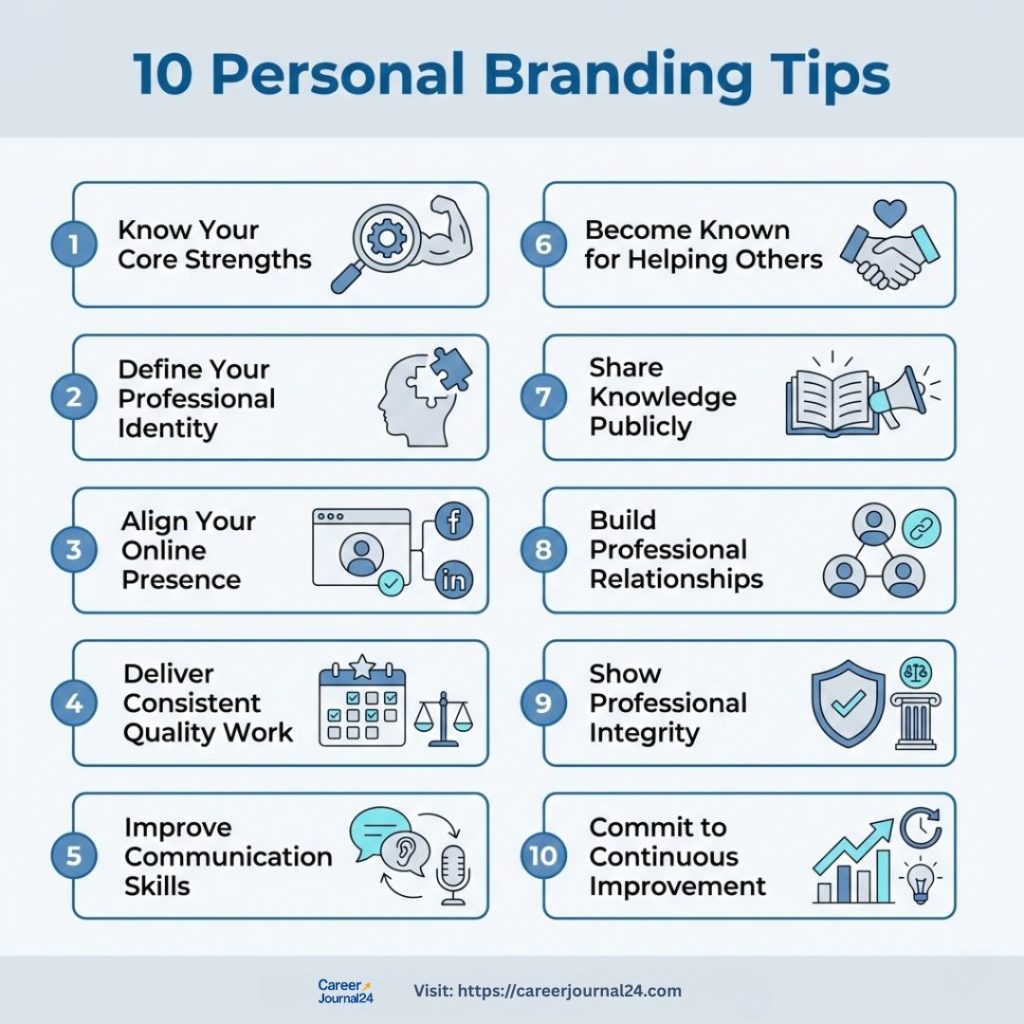
10 Personal Branding Tips
Building a strong personal brand does not happen by chance. It develops through consistent habits, thoughtful communication, and professional behavior that make people trust and remember you. The following personal branding tips focus on practical actions that professionals can apply in everyday work situations. These strategies are designed to help you become more visible for the right reasons, strengthen professional relationships, and create opportunities over time. Each tip highlights simple but powerful adjustments that gradually shape how others perceive your professional value and reliability.
1. Know Your Core Strengths
Strong personal branding begins with clarity about your abilities. Many professionals struggle because they try to present themselves as good at everything, which weakens their professional identity. Instead, reflect on situations where colleagues or clients regularly seek your help. Notice tasks you perform confidently and consistently. Feedback from coworkers often reveals hidden strengths you may overlook. Understanding your natural advantages helps you position yourself clearly in professional spaces. When people associate you with specific strengths, your credibility increases. Personal branding grows faster when your message aligns with your real capabilities and daily performance.
2. Define Your Professional Identity
A memorable brand is specific, not general. Rather than introducing yourself with broad job titles, describe the value you create. For example, saying you help teams improve workflow efficiency is clearer than simply stating your department. Specific positioning allows people to recall you when relevant opportunities appear. Professional identity also influences the projects you attract and the network you build. When your expertise becomes recognizable, your reputation expands organically. Clear positioning reduces confusion and increases trust. People connect faster when they understand what you do best and why your contribution matters.
3. Align Your Online Presence
Your online presence often creates first impressions before personal meetings happen. Recruiters, partners, and clients frequently search candidates online, so your profiles should reflect professional consistency. Ensure your LinkedIn and other platforms clearly present your experience, achievements, and interests aligned with your career direction. Avoid conflicting personal content that may weaken professional credibility. A strong digital presence strengthens personal branding efforts because people gain confidence when your online identity matches your real-world professionalism. Regularly updating profiles and sharing relevant insights shows engagement and growth within your industry.
4. Deliver Consistent Quality Work
Personal branding is ultimately built on performance, not appearance. Consistently delivering reliable results makes colleagues and managers trust you. Meeting deadlines, maintaining accuracy, and handling responsibilities responsibly strengthen professional reputation over time. Even small tasks completed well contribute to brand perception. People naturally recommend individuals they trust to deliver outcomes. Consistency creates reliability, and reliability forms brand strength. When others know your work quality remains stable regardless of pressure, your professional value rises automatically. Strong branding is not occasional excellence but dependable performance every day.
5. Improve Communication Skills
Clear communication significantly shapes how people perceive professional competence. Professionals who express ideas clearly and listen attentively often gain leadership trust faster than those who struggle to communicate. Communication includes emails, meetings, presentations, and informal conversations. Listening carefully, responding thoughtfully, and keeping messages concise improve workplace relationships. People feel comfortable collaborating with individuals who communicate respectfully and confidently. Effective communication reduces misunderstandings and increases teamwork efficiency. Personal branding improves when others associate you with clarity, professionalism, and constructive conversation, making you someone teams enjoy working with regularly.
6. Become Known for Helping Others
Professionals who support others often build strong reputations naturally. Helping coworkers solve challenges, guiding newcomers, or sharing useful information creates goodwill within teams. This approach builds trust and strengthens relationships without appearing self-promotional. When colleagues experience direct benefit from your support, they recommend you willingly. Helpful professionals become central figures within workplaces because they contribute to collective success. Personal branding improves when others view you as cooperative and dependable rather than competitive. Generosity in knowledge and support creates lasting professional connections that open future opportunities organically.
7. Share Knowledge Publicly
Sharing professional insights establishes credibility and expertise. Writing short articles, posting lessons learned, or discussing industry trends demonstrates engagement in your field. You do not need to be a senior expert to contribute valuable perspectives. Even practical experiences from everyday projects help others learn. Public knowledge sharing positions you as someone invested in professional growth. Over time, people begin associating you with valuable insights. This recognition strengthens your personal brand and expands professional reach. Thoughtful contributions build authority gradually, making you visible to recruiters, collaborators, and industry communities.
8. Build Professional Relationships
Networking remains one of the most powerful career tools. Building genuine relationships creates opportunities beyond immediate workplaces. Staying connected with former colleagues, engaging in professional communities, and attending industry discussions help expand influence. Building a professional network is not transactional but relationship-oriented. People prefer recommending individuals they trust personally and professionally. Maintaining professional relationships also provides learning opportunities and collaboration possibilities. Strong personal branding grows when people remember positive interactions with you. A well-connected professional often receives opportunities before they are publicly advertised, creating long-term career advantages.
9. Show Professional Integrity
Integrity forms the foundation of a strong professional reputation. Professionals who accept responsibility, honor commitments, and act ethically gain lasting trust. Admitting mistakes and correcting them responsibly strengthens credibility rather than weakens it. Trustworthy individuals are often considered for leadership roles because people rely on their honesty. Personal branding improves when colleagues see consistency between words and actions. Integrity builds long-term respect, which cannot be replaced by technical skills alone. Professionals known for fairness and responsibility create safer working environments, making others more comfortable collaborating with them regularly.
10. Commit to Continuous Improvement
Industries evolve quickly, and professionals must grow continuously to remain valuable. Learning new tools, upgrading skills, and adapting to change demonstrate ambition and professionalism. Continuous improvement shows employers and clients that you remain relevant and forward-thinking. Professionals who invest in growth often receive better career opportunities because they stay prepared for future demands. Personal branding strengthens when people associate you with adaptability and curiosity. Regular learning also boosts confidence and performance. Long-term success depends on consistent development rather than relying solely on past achievements or qualifications. Professionals today can access free professional learning resources to upgrade skills and stay competitive.
Common Personal Branding Mistakes
While many professionals work hard to build their careers, personal branding efforts can sometimes fail due to avoidable mistakes. Often, these errors occur unintentionally through inconsistent behavior, unclear positioning, or neglecting professional relationships and online presence. Understanding these common branding pitfalls helps you correct them early and protect your professional reputation. The following sections explain frequent mistakes that weaken personal branding and provide awareness so you can maintain credibility, consistency, and authenticity while building a strong and trusted professional identity.
1. Trying to Please Everyone
One major mistake professionals make is attempting to appeal to everyone. This approach weakens identity because people cannot clearly understand your strengths. Strong personal brands focus on specific value areas rather than broad approval. When professionals chase universal acceptance, they often lose authenticity and clarity. Instead, identify where you provide the most value and build recognition around it. Professionals remembered for specific strengths attract better opportunities than those perceived as average in many areas. Focus creates distinction, while trying to please everyone often leads to forgettable professional impressions.
2. Inconsistent Professional Behavior
Inconsistency damages professional reputation quickly. Performing excellently one week and carelessly the next confuses colleagues about reliability. Personal branding depends on predictable professionalism. Colleagues and managers trust professionals who maintain standards even under pressure. Inconsistent behavior reduces confidence and weakens opportunities for leadership or growth. Consistency does not mean perfection but dependable effort. Professionals who maintain stable performance become trusted collaborators. Over time, reliability strengthens brand identity more effectively than occasional exceptional performance, ensuring long-term career stability.
3. Over Promotion of Achievements
Constantly highlighting achievements can make professionals appear self-centered rather than confident. Personal branding works best when accomplishments are demonstrated through results and teamwork recognition rather than constant self-praise. Excessive self promotion may cause colleagues to feel uncomfortable or undervalued. Professionals should communicate achievements confidently but humbly, ensuring credit is shared where appropriate. Balanced recognition builds respect without creating resistance. Effective branding combines competence with humility, making collaboration smoother. People prefer working with professionals who let their work speak rather than continuously seeking attention.
4. Ignoring Online Reputation
Neglecting online presence is a significant personal branding mistake in modern professional environments. Recruiters and clients frequently review social media before engaging professionally. Outdated or unprofessional content may negatively influence perceptions. Professionals should monitor digital footprints and ensure profiles represent current skills and experiences. Maintaining professional online content strengthens credibility and visibility. Ignoring online reputation risks losing opportunities before conversations even begin. Personal branding today requires managing both offline and online impressions carefully to ensure consistency across all professional interactions.
5. Lack of Clear Career Direction
Professionals without clear direction often struggle to build strong brands. Frequently changing goals or presenting mixed professional interests confuses potential employers or collaborators. Clear career direction helps others understand how to support or recommend you. Personal branding improves when professionals communicate consistent career focus. Direction does not restrict growth but provides clarity. When people know where you aim to go professionally, they connect you with relevant opportunities. Consistent messaging strengthens brand identity and increases chances of attracting roles aligned with long-term career aspirations.
6. Neglecting Professional Relationships
Focusing solely on work performance while ignoring relationships weakens personal branding. Career success often depends on networks and collaborations, not just individual performance. Professionals who fail to maintain connections miss opportunities created through referrals or partnerships. Relationship neglect can also isolate professionals within workplaces. Strong personal brands develop through positive interactions and mutual support. Maintaining professional relationships ensures continued collaboration and trust. Investing time in colleagues and industry connections creates long-term career benefits beyond immediate job responsibilities.
7. Resisting Feedback and Growth
Professionals who reject feedback often limit their development. Personal branding strengthens when individuals accept constructive criticism and adapt positively. Resistance to feedback creates perception of arrogance or stagnation. Growth-oriented professionals show willingness to learn and improve continuously. Accepting feedback demonstrates professionalism and maturity. Colleagues and managers appreciate professionals open to improvement. Personal branding benefits when people associate you with adaptability and openness. Continuous improvement ensures long-term relevance in evolving industries, increasing career opportunities and professional respect.
8. Lack of Authenticity
Pretending to be someone else for professional gain rarely works long term. Authentic professionals build trust more easily because people sense genuine behavior. Personal branding should amplify real strengths rather than create artificial identities. When professionals try to copy others, they often struggle to maintain consistency. Authenticity ensures sustainability and credibility in professional relationships. People prefer working with individuals who remain honest about abilities and values. Authentic branding attracts opportunities aligned with real strengths, leading to more satisfying career experiences and stronger long-term professional relationships.
Final Thoughts on How to Brand Yourself
Learning how to brand yourself is not about pretending or exaggerating achievements. It is about making your real strengths visible and dependable. Effective personal branding grows from consistent performance, clear communication, and genuine professional relationships. Applying practical personal branding tips gradually improves reputation and opportunity flow. Focus on delivering value, helping others succeed, and continuously improving skills. Over time, people begin associating your name with trust and competence. Personal branding is a long-term investment in professional identity, shaping how opportunities find you rather than forcing you to chase them constantly.